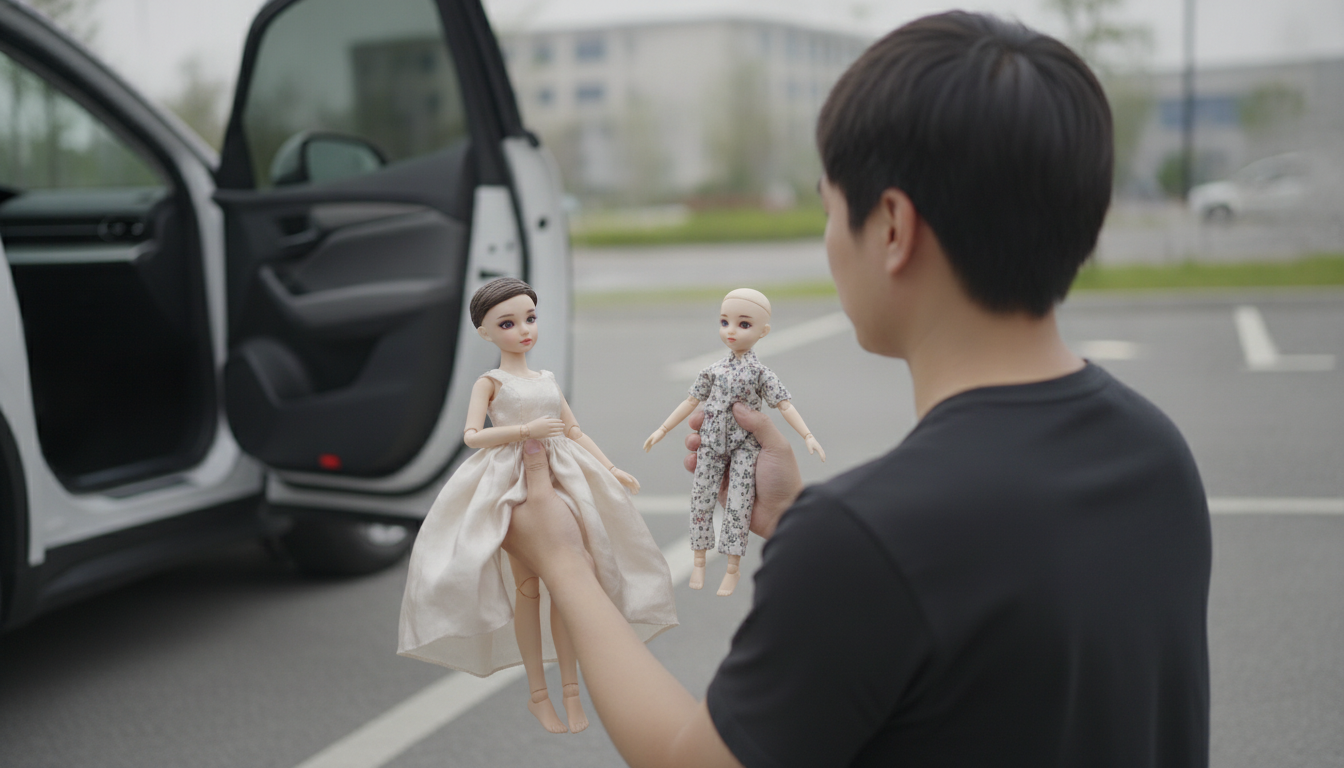
BJD stands for “ball-jointed doll,” which describes a doll construction style: a figure made of separate parts connected with ball-and-socket joints (usually strung with elastic) for wide poseability. MJD stands for “mechanical jointed doll” (sometimes used more loosely as “mini jointed doll”), and it typically describes a different joint engineering approach where joints are built with internal mechanical hinges or pin systems rather than classic ball joints.
A BJD’s hallmark is the ball-and-socket joint. The round joint ends allow smooth rotation and subtle posing, with tension adjusted by restringing or changing elastic. An MJD more often relies on hinge-like joints or engineered mechanisms that click, lock, or move along a defined path, which can make some poses easier to hold but may reduce the “organic” flow of motion associated with BJDs.
Many BJDs are made from resin and are popular in customization circles because sanding, blushing, and part swaps (hands, feet, headcaps, eyes, wigs) are common. MJDs are frequently produced in ABS/PVC or mixed materials, and their engineering can prioritize durability and repeatable posing over deep modding. That said, both types can be customized—just with different tools, expectations, and limitations depending on the manufacturer.
“MJD” is not used as consistently across the hobby as “BJD.” Some sellers use MJD to describe smaller jointed dolls, while others use it to distinguish mechanical joints from ball joints. Because of this, the most reliable way to confirm what you’re buying is to review the doll’s construction photos (joint close-ups), material specs, and whether it uses elastic stringing.
Choose a BJD if you want the classic resin hobby experience, smooth posing, and a huge ecosystem of parts and styling options. Choose an MJD if you want a more engineered, sturdy joint system that may hold certain poses with less fuss. For hands-on tips on styling, wig care, and safe handling—especially for 1/6 scale—visit this BJD styling and care guide.
Limit contact with dark fabrics, wash new clothing before use, and store the doll away from direct sunlight and heat. Handle with clean hands and use gentle, non-abrasive methods when cleaning faceups or body surfaces.






Leave a comment