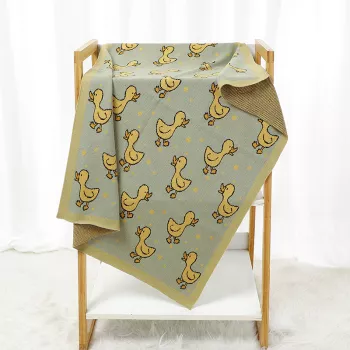
Knit blankets are wonderfully soft and breathable, but their stretch can make a swaddle loosen if it isn’t anchored well. The goal is a snug wrap at the chest with enough room for hips and legs, plus a final “lock” that keeps the fabric from sliding.
1) Start with the right size and surface. Lay the knit blanket on a flat surface. If it’s large, fold it into a triangle or a long rectangle so you’re working with less extra fabric.
2) Create a firm top edge. Fold the top edge down 2–3 inches to form a thicker band. This reduces stretch at the neckline and helps the swaddle hold its shape.
3) Position baby safely. Place baby on their back with shoulders just below the folded band. Keep the blanket below the neck.
4) First side: anchor and tuck. Bring one corner/side across the chest and tuck it snugly under the opposite side of the body (under the back/hip). This under-body tuck is the first “anchor point.”
5) Bottom: keep hips comfortable. Bring the bottom up and over the feet, then fold it down or to the side so legs can bend and move. Avoid pulling the lower section tight around the hips.
6) Final side: pull across, then “double tuck.” Bring the remaining side across the chest and pull it snug (not restrictive) while smoothing out slack. Tuck the end under baby’s back. If there’s extra fabric, tuck a second time into the first layer near the waist to create a friction “lock.”
Use firm, flat tucks rather than bunching; bunched knit slips more easily. If the blanket is very stretchy, fold it once lengthwise before swaddling to add structure. For more detail on choosing and using soft cotton knit swaddles, see the full guide here: super soft cotton knit baby swaddle blanket guide.
Stop swaddling at the first signs of rolling (often around 2–4 months) or as soon as baby can roll over, since swaddling can become unsafe once rolling begins.







Leave a comment