-
Shop
- Adidas
- Advanced Technologies
- AI Skills
- AI Skills for Creators & Freelancers
- AI Client Management
- AI Ethics
- AI Mindset
- AI Tools & Prompts
- AI Writing & Content Creation
- Audio, Voice & Music
- Design & Visual Creation
- Email, Messaging & Communication
- Freelancing & Business
- Marketing, Ads & Conversion
- Productivity, Workflow & Automation
- SEO & Search Optimization
- Social Media Content & Growth
- Strategy, Planning & Analytics
- Video Creation & Editing
- AI Skills Mastery 2026 Collection
- Beauty
- Best-Sellers
- Business & Digital Skills
- Calvin Klein
- Car Accessories
- Car Buying & Ownership
- Confidence
- Dating & Social Skills
- Digital Resources
- Budgeting & Saving
- Cozy Feast Collection
- Electronics & Technology
- Emotional Intelligence
- Entrepreneurship & Business Growth
- Financial Education
- Financial Independence
- Financial Mindset & Psychology
- Goal Setting
- Hobbies
- Leadership
- Mindfulness
- Mindset
- Motivation
- Online Business
- Positive Thinking
- Productivity
- Self Confidence
- Sleep Improvement
- Smart Life with AI
- Stress Management & Relaxation
- Travel Planning
- Yoga & Fitness
- Yoga & Mind-Body Practices
- Education & Learning
- Family & Home
- Family & Parenting
- Fashion
- Fashion & Beauty
- Furniture
- Gadgets
- Health & Beauty
- Health & Wellness
- Home & Garden
- Home Styling & Organization
- Kids & Babies
- Legend Footwear Brands Collection
- Lighting
- Nike
- Parenting & Child Development
- Patio, Lawn & Garden
- Personal Growth
- Personal Growth & Wellness
- Personal Style & Fashion
- Pet Care
- Pet Lifestyle & Wellness
- Pet Supplies
- Pets
- Shoes
- Sport & Outdoors
- Stress Relief & Relaxation
- Travel
- Travel & Adventure
- Wealth
- Wellness
Toddler Sleep Tips for Loud Noises: Stop Night Wake-Ups

Helping Your Toddler Sleep Through Loud Noises
Toddlers often wake to sudden sounds because their sleep cycles are lighter than adults’, their sense of safety is still developing, and their brains are busy processing new experiences. A few targeted changes—environment, timing, and calming skills—can reduce startles and help sleep stay on track even when the house or neighborhood gets noisy.
Why noise wakes toddlers (and why it can come and go)
Many parents notice that a child who “slept through everything” as a baby can suddenly pop awake from a creak, siren, or barking dog. That swing is normal in early childhood.
- Light sleep is common: Toddlers cycle through lighter stages often, so brief awakenings are expected. A loud or sudden sound can turn a normal micro-wake into a full wake-up.
- Development happens in waves: New language skills, new fears, and separation anxiety can temporarily increase nighttime alertness for a few weeks at a time.
- Overtiredness increases sensitivity: When naps are off or bedtime slips later, the same noise tends to feel “bigger” to a tired nervous system.
- One startling event can create a pattern: After a scary bang (storm, alarm, dog lunge at the fence), some toddlers start “listening for it,” which makes them more likely to wake again.
For a general reference on healthy sleep needs and routines, see guidance from American Academy of Pediatrics (HealthyChildren.org) and the CDC sleep resources.
Start with a quick sleep-and-sound check
Before changing everything, collect a small, useful snapshot. Three to five nights is usually enough to spot a pattern.
- Track wake-ups: time, suspected sound, how long resettling took, and whether reassurance helped or escalated the wake-up.
- Confirm age-appropriate total sleep (including naps) and a consistent wake time; irregular mornings can amplify night sensitivity.
- Identify the most disruptive noises: sudden bangs, voices through walls, traffic spikes, pets, appliances cycling, or siblings.
- Check room setup: door gaps, window seals, bed placement near shared walls, echo-y bare floors, and monitor volume.
Small setup changes are often faster and more effective than trying to “teach” a toddler to ignore noise when their environment is still unpredictable.
Make the room more sound-stable (without making it silent)
Silence can make unpredictable sounds feel sharper. A steadier sound environment helps many toddlers stay asleep through spikes.
- Aim for consistent background sound: A fan or white noise can soften sudden peaks so they don’t cut through light sleep as dramatically.
- Use white noise safely: Keep volume moderate, place it across the room (not right next to the bed), and keep cords out of reach.
- Soften the acoustics: Add a rug, heavier curtains, or other soft materials to reduce echo.
- Seal sound leaks: Try a draft stopper at the door, basic weatherstripping, and moving the bed away from windows or shared walls.
- Time household noise: Run the dishwasher, trash bins, vacuuming, and loud cleanup before bedtime whenever possible.
Common noise triggers and practical fixes
| Noise trigger | Why it wakes toddlers | What to try tonight |
|---|---|---|
| Sudden door slams / footsteps | Sharp peaks cut through light sleep | Add felt pads, close doors fully, soft slippers, steady white noise |
| Traffic / sirens | Unpredictable bursts and pitch changes | Move bed to interior wall, close curtains, run a fan/white noise |
| Voices / TV through walls | Speech patterns are attention-grabbing | Lower bass, relocate TV, door draft stopper, white noise |
| Pets barking / scratching | Startle + perceived threat | Keep pets out at night, enrichment earlier, white noise masking |
| Appliances cycling (ice maker, HVAC) | Intermittent mechanical spikes | Shift bedtime away from peak cycle times if possible, add masking sound |
Teach a simple “back to sleep” skill for noisy moments
A calm room helps, but toddlers also benefit from a repeatable skill they can lean on when something startles them.
If your toddler sleeps better with a cozy, familiar feel, consider keeping a consistent sleep comfort cue (like the same blanket feel and bedtime phrase). A soft layer can also reduce the “new environment” effect during noisy evenings: Cozy Baby Quilt – Soft & Thick Newborn Swaddle Blanket.
Use gradual noise exposure when sensitivity is high
Keep naps and bedtime aligned to reduce startles
Noisy seasons: travel, fireworks, storms, and construction
When to ask a pediatrician
A structured plan for parents who want step-by-step support
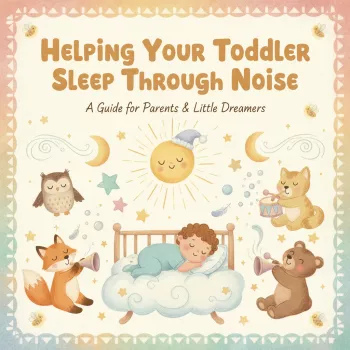
If a guided, parent-friendly plan would help, Helping Your Toddler Sleep Through Noise (ebook) is designed specifically for loud-neighborhood nights, light sleepers, and startle-prone wake-ups.
For broader support around letting go of “perfect parenting” pressure while staying consistent, Parenting Without Perfection: A Practical Guide can help simplify expectations so nighttime boundaries feel easier to maintain.
FAQ
Is white noise safe for toddlers?
Yes, when used at a moderate volume and placed across the room rather than next to your toddler’s bed. Continuous, steady sound is typically more helpful than silence for masking unpredictable noise peaks.
How long does it take for a toddler to get used to loud noises at night?
Many families see some improvement within a few nights after adding consistent masking sound and using the same calm response each time. If fear associations formed, gradual exposure and schedule stabilization often take 1–2 weeks (sometimes longer) to fully show results.
What should be done when a sudden noise wakes a toddler at 2 a.m.?
Pause briefly, then give quick reassurance with minimal light and talking, repeat the same soothing steps, and return your toddler to bed. Avoid adding new routines in the moment, since that can unintentionally teach “wake-ups = extra rewards.”
Recommended for you


Was this article helpful?
Yes
No








Leave a comment