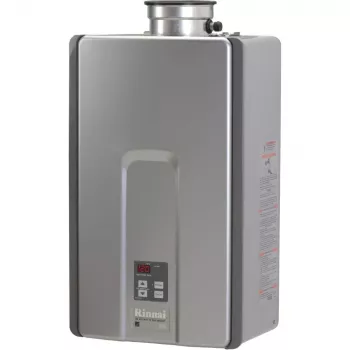
For two showers and one bathroom sink running at the same time, a good target is about 5–7 GPM from a tankless water heater, with the exact number depending on your fixture flow rates and how cold your incoming water is.
Typical flow rates look like this:
• Shower: 1.5–2.5 GPM each (many modern heads are 1.8–2.0 GPM)
• Bathroom sink: 0.5–1.0 GPM (often 0.5 GPM with an aerator)
If both showers are 2.0 GPM and the sink is 0.5 GPM, your simultaneous demand is 2.0 + 2.0 + 0.5 = 4.5 GPM. If your showerheads are higher-flow (2.5 GPM) and the sink is 1.0 GPM, demand can reach 6.0 GPM.
Tankless heaters don’t deliver the same GPM in every home. Their output depends on the temperature rise (how much the unit must heat the water). Colder incoming water requires more heating, which reduces the GPM the unit can supply at shower temperatures.
As a quick sizing rule:
• Warmer climates / higher incoming temps: a 5–6 GPM capable unit may comfortably run two showers plus a sink.
• Colder climates / winter groundwater: plan closer to 7–9+ GPM (or a higher-BTU model) to maintain steady hot water under load.
To cover real-world overlap (someone adjusts the sink, a shower briefly spikes, seasonal temperature changes), choosing a unit that can supply at least 6–8 GPM at your expected temperature rise is a solid, low-regret choice for two showers and a sink.
For a deeper sizing walkthrough and examples, see the main guide here: https://lustrous.store/what-gpm-do-i-need-for-a-tankless-water-heater-for-two-showers-and-a-sink/.
Yes. The colder your incoming water, the more the heater must raise the temperature, and the fewer gallons per minute it can deliver at a comfortable shower temperature.





Leave a comment