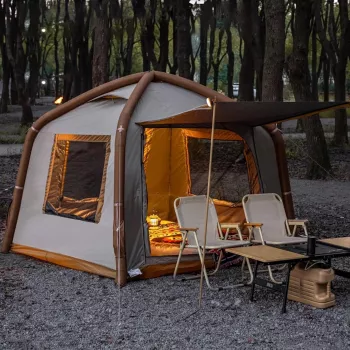
Inflatable camping tents can be very waterproof, but their performance depends on the fabric coating, seam construction, and how well the air-beam structure is integrated into the fly and groundsheet. Many quality inflatable models are built for real weather, using taped seams and robust coatings that keep rain from wicking through stitch holes or pooling at stress points. That said, “waterproof” isn’t a single feature—it’s a system that includes the rainfly, inner tent, floor, zippers, vents, and even how the tent is pitched.
Most tent waterproof ratings refer to hydrostatic head (HH), measured in millimeters (mm). It describes how much water pressure a fabric can resist before it starts to leak. A higher number generally means better resistance to sustained rain and water pressure, especially on the floor where body weight and gear increase pressure.
For typical three-season camping, a rainfly around 1,500–3,000 mm HH is a solid target, while a bathtub-style floor is often best at 3,000–10,000 mm HH. If you camp in frequent downpours or windy conditions that drive rain sideways, leaning toward the higher end of those ranges helps. For fair-weather trips, lower ratings can still work if seams are taped and the fly has good coverage.
Inflatable (air-beam) frames are naturally flexible, which can reduce the risk of snapped poles and help the tent “give” under gusts. Many designs also tension the fly evenly, which helps water run off rather than puddle. Still, storm readiness depends on details like full-coverage rainflies, protected zippers, and vestibules that prevent runoff from entering when doors are opened.
Look for fully taped seams, a high-cut bathtub floor, and a fly that reaches low enough to block splashback. Ventilation is also crucial: condensation can mimic leaks, especially in humid or cold conditions. Proper staking and guying keep the fly from touching the inner tent, reducing the chance of water transfer.
For a deeper breakdown of ratings, construction details, and what to prioritize for your camping style, see the full guide here: https://lustrous.store/how-waterproof-are-inflatable-camping-tents-and-what-waterproof-rating-should-you-look-for/.
A footprint is strongly recommended because it reduces abrasion, helps prevent punctures, and adds a buffer against groundwater. It can also extend the life of the floor coating, especially on rocky or gritty sites.





Leave a comment