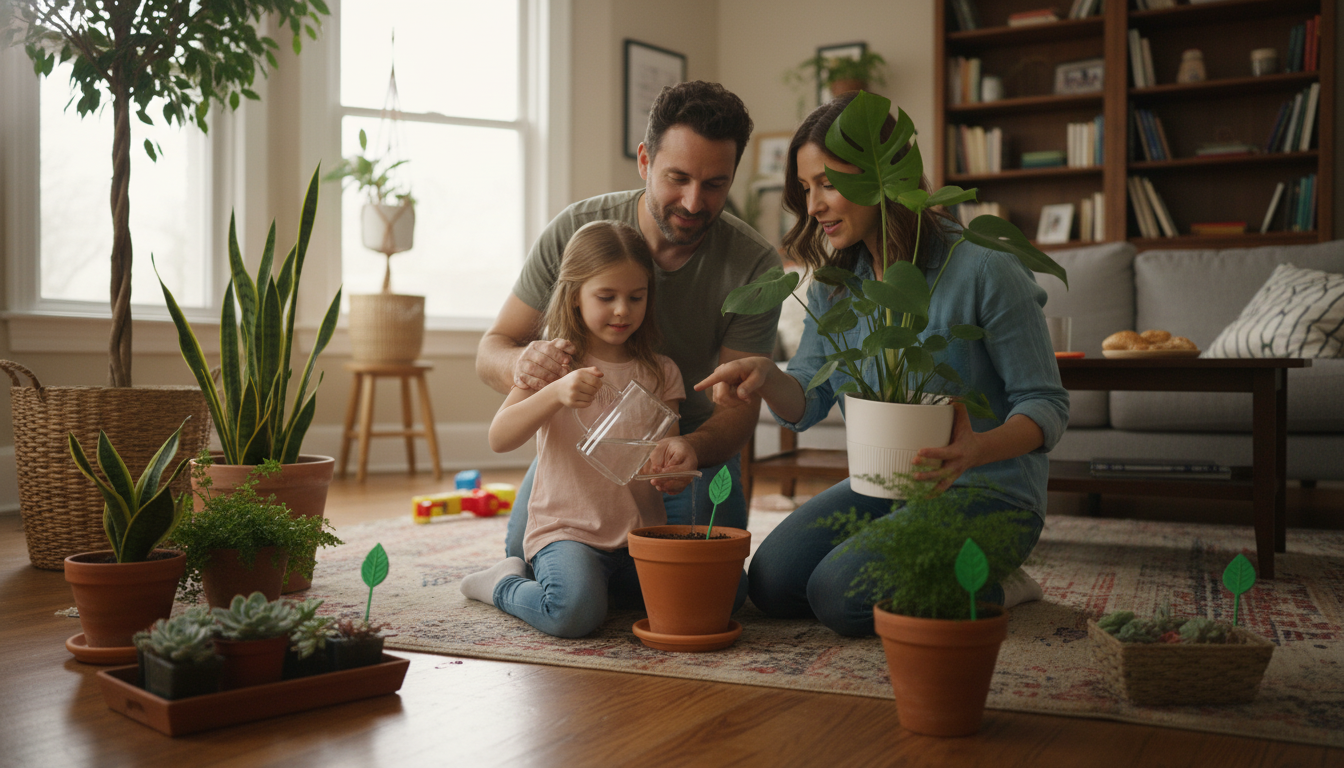
Overwatering usually isn’t about “too much water” in one moment—it’s about watering too often, so roots sit in constantly damp soil and can’t get enough oxygen. The goal is to water thoroughly, then let the potting mix dry to the right point before watering again.
Skip the calendar. Use a finger test: push your finger 1–2 inches into the soil (deeper for larger pots). If it feels moist and cool, wait. If it feels dry at that depth, it’s time to water. For sensitive plants or deeper pots, a simple moisture meter can help confirm what’s happening below the surface.
When you do water, water evenly around the pot until water runs out of the drainage holes. This flushes the mix and ensures roots get hydrated throughout the pot. Then empty the saucer or cachepot within 10–15 minutes so the pot isn’t sitting in a puddle.
Light and temperature change everything. Bright windows, warm rooms, and moving air dry soil faster; low light and cool rooms slow drying. Pot choice matters too: terracotta breathes and dries faster than plastic; larger pots hold moisture longer; and dense soil mixes stay wet compared to airy, well-draining blends.
Yellowing lower leaves, mushy stems, fungus gnats, and a musty smell can signal soil staying wet too long. If that happens, pause watering, improve airflow/light, and consider repotting into a better-draining mix if the soil remains soggy for days.
For a deeper, step-by-step guide (including common mistakes and quick fixes), visit https://lustrous.store/how-to-water-indoor-plants-without-overwatering/.
Most indoor plants do best when watered only after the top portion of the potting mix dries out. The exact timing depends on light, temperature, pot size, and the plant type, so checking the soil is more reliable than sticking to a schedule.


Leave a comment