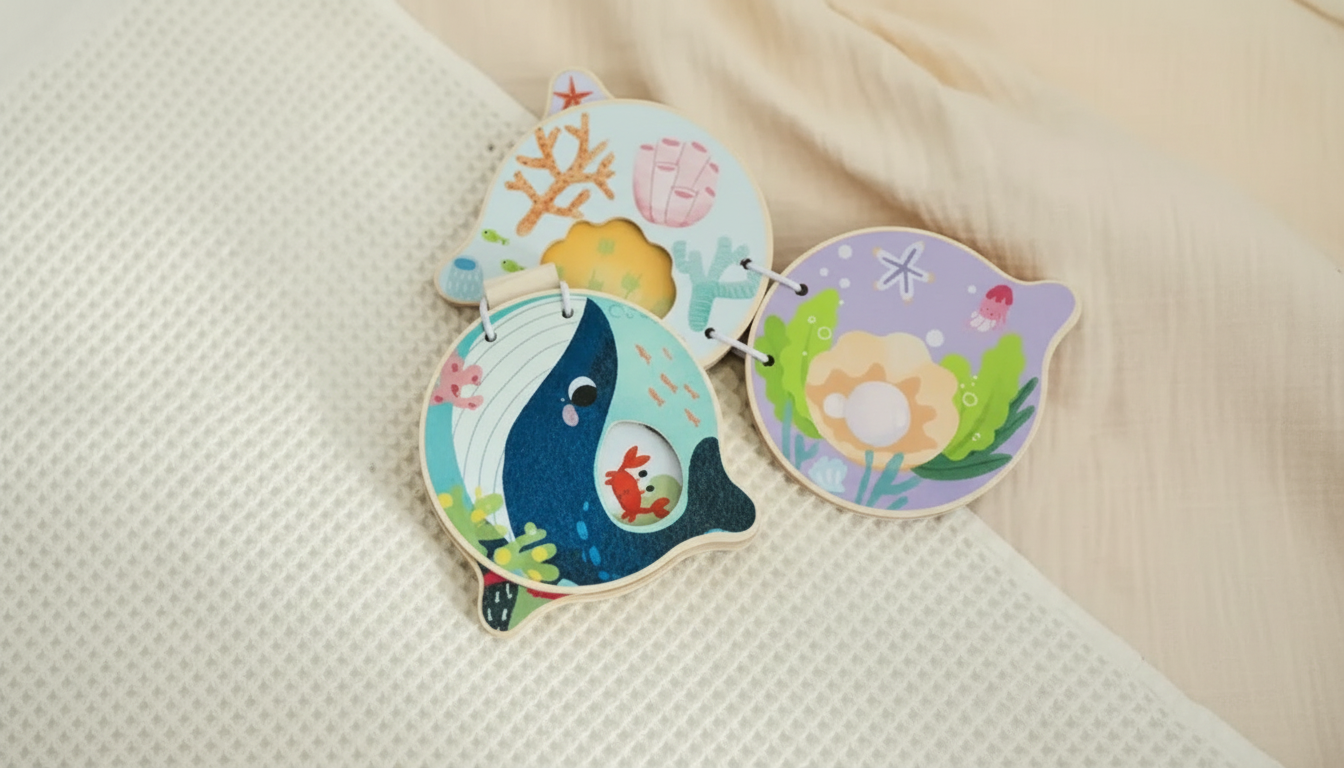
A sturdy, ocean-themed learning book can turn everyday play into early discovery. With simple marine animal pictures and easy-to-hold wooden pages, this type of toy supports naming, pointing, and shared reading routines while holding up to repeated use. The wooden format also adds a satisfying “real book” feel for little hands that love to grab, tap, and (eventually) turn pages on their own.
What It Is and Why Babies Love It
A wooden baby learning book is a page-turning toy built like a chunky board book, but with durable wooden pages. Each page typically features a clear, simple illustration—here, friendly marine animals such as fish, whales, crabs, and turtles. That ocean theme naturally invites caregivers to label what baby sees, while baby practices looking, reaching, and reacting.
- Easy-to-hold “book” format: Pages turn one at a time, helping babies understand cause-and-effect while staying close to familiar storytime routines.
- Marine animal illustrations: Bright, recognizable shapes encourage pointing, babbling, and early word associations.
- Tactile, weighty feel: Compared with thin paper, wood offers gentle resistance—useful for controlled grasping and two-handed holding.
- Predictable layout: A simple page-by-page structure makes it easy to repeat the same mini-routine each day (open, name, pause, turn).
Early Skills It Can Support
Babies learn best through repetition and interaction. A wooden learning book makes those moments easier to repeat—at home, in the car seat, or during a quiet break—without worrying about torn pages.
- Language building: Label animals, try simple sound effects, and add easy descriptors like “big/small” or “blue/green.”
- Visual attention: Babies practice focusing on a single image and tracking motion as the page turns.
- Fine motor practice: Turning pages, pinching edges, and coordinating both hands builds early hand control.
- Social connection: Shared play supports back-and-forth interaction—pause, point, wait, and respond.
- Early categorization: Ocean animals create natural groupings (“sea animals,” “animals with shells,” “animals with fins”).
Simple Activities for Different Ages
The same wooden book can stay interesting as your child grows—by changing what you do with it. Short, calm sessions are often the most successful, especially for younger babies.
0–6 months
- Hold the book at a comfortable distance and angle.
- Show one page at a time for a few seconds.
- Name just one animal per page (“Whale.”) and pause to let baby look.
6–12 months
- Encourage touching and page turning, even if it’s clumsy at first.
- Try “find the fish” and celebrate any attempt to reach or point.
- Repeat favorite pages to build familiarity and anticipation.
12–24 months
- Ask simple choice questions (“Is it the whale or the crab?”).
- Model two-word phrases (“blue fish,” “big whale”).
- Let your child turn the pages while you narrate.
2+ years
- Add counting (“How many fish?”) and color naming.
- Try pretend play (“Where does the turtle swim?” “Under the waves!”).
- Invite your child to “read” to you using their own words.
Quick Ocean-Themed Play Prompts
| Prompt |
What to Say |
Skill Practiced |
| Point-and-name |
“That’s a whale.” |
Vocabulary |
| Find and touch |
“Can you touch the crab?” |
Attention + motor control |
| Sound play |
“Splash, splash—swim!” |
Imitation + turn-taking |
| Describe |
“Big whale, small fish.” |
Adjectives + comparison |
| Count together |
“One, two, three fish.” |
Early numeracy |
Safety and Materials Checklist for Wooden Baby Books
Because babies explore with their mouths and hands, safety details matter. Before offering any wooden book, give it a quick scan and keep checking it as it ages.
- Smooth edges and corners: Helps reduce scratches during mouthing and handling.
- Non-toxic finishes: Look for child-safe paints/inks on illustrated surfaces.
- Sturdy binding: Connections between pages should be secure so parts don’t loosen over time.
- Appropriate thickness: Thick pages discourage snapping and help reduce the risk of splintering.
- Supervision and inspection: Especially for heavy chewers; retire the toy if damage appears.
For broader toy safety guidance, consult the American Academy of Pediatrics’ toy safety tips and the U.S. Consumer Product Safety Commission toy safety resources.
When Wooden Toys Fit Into Baby’s Toy Rotation
Many families bring in simple wooden toys once baby begins grasping and bringing objects to the mouth—often around the middle of the first year. That said, caregiver-led “show and tell” can be useful even earlier, long before independent page turning happens.
- For younger babies, try short sessions with slow page turns and simple labels.
- As sitting improves and hands get steadier, page turning becomes a natural next step.
- Always follow the maker’s age guidance and discontinue use if the toy shows damage.
Care Tips to Keep It Looking New
- Wipe clean: Use a lightly damp cloth; avoid soaking or dishwashing, which can swell wood.
- Dry promptly: Store away from high humidity and direct heat sources.
- Rotate toys: Switching between a few favorites helps reduce wear and keeps interest fresh.
- Teething check: If used during teething, inspect edges more often and retire at the first sign of splintering.
Product Picks for Ocean-Themed, Screen-Free Learning
A Practical Gift for Everyday Learning
FAQ
When to introduce wooden toys to baby?
Many babies are ready once they can grasp objects, bring them to the mouth, and sit with support—often around the middle of the first year. Start with smooth, simple wooden items, keep play sessions short, supervise closely, and follow the maker’s age guidance.
Recommended for you



Leave a comment