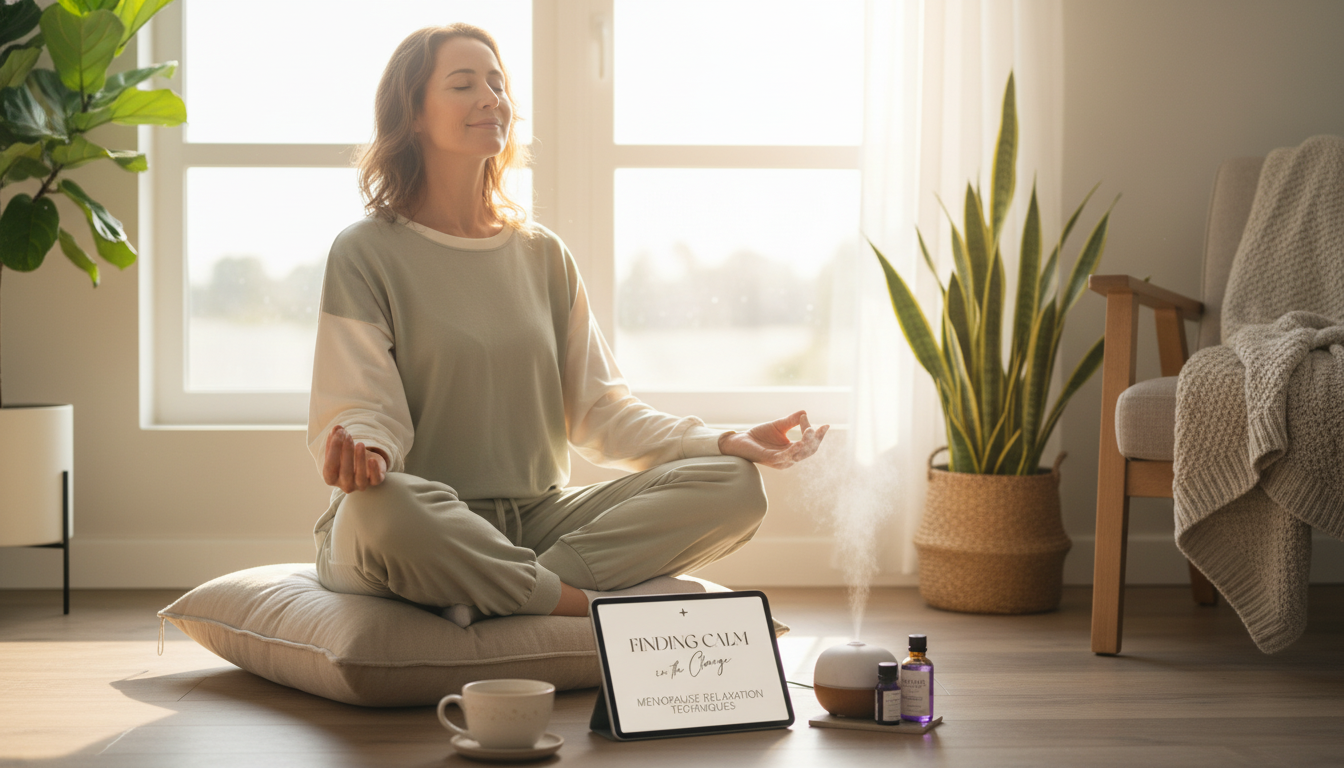
Menopause can shift sleep, mood, and stress tolerance in ways that feel unfamiliar. A steady, repeatable calming routine—built from simple relaxation techniques, supportive habits, and compassionate self-care—can help restore emotional balance and make daily life feel more manageable. If you’re looking for reliable ways to feel more grounded day to day, small practices done consistently tend to work better than “perfect” routines that are hard to maintain.
For a helpful overview of what’s happening in the body during this transition, reputable education resources include The Menopause Society and ACOG.
Stress during menopause isn’t “all in your head.” Hormonal fluctuations can influence temperature regulation, sleep quality, and stress reactivity, which can make smaller stressors feel much bigger than they used to. When the body is running warmer, sleeping lighter, or waking more often, your nervous system may have less buffer for everyday demands.
Common stress amplifiers include night sweats, insomnia, racing thoughts, mood swings, and increased worry or irritability. These symptoms can feed each other: a rough night leads to more sensitivity the next day, which can lead to more tension at bedtime.
A calm plan works best when it’s consistent, flexible, and designed around real-life constraints (time, energy, responsibilities). Think “repeatable” rather than “impressive.”
When stress spikes, the goal is to signal safety to the body quickly. The following techniques are short on purpose—easy enough to use in a bathroom break, in the car before walking inside, or during a middle-of-the-night wake-up.
| Situation | Try This | Time Needed | Helpful Tip |
|---|---|---|---|
| Racing thoughts at night | Box breathing + slow shoulder drop | 2–5 min | Keep lights low; avoid checking the time |
| Irritability or overwhelm | 5-4-3-2-1 grounding | 2–4 min | Name sensations without judging them |
| Hot flash + anxious surge | Cool cloth + long exhale breathing | 1–3 min | Exhale longer than inhale |
| Tension headache or jaw clench | Progressive muscle release (jaw/shoulders/hands) | 3–6 min | Exhale as the muscle softens |
For a science-based overview of relaxation methods, the NIH’s NCCIH has a clear guide to common techniques here: Relaxation Techniques for Health.
A calm routine is easier to keep when it’s attached to something you already do. This avoids the mental load of constantly deciding when to “fit it in.”
If wake-ups are frequent, keep your “reset plan” simple: sit up, do 6 long exhales, then choose one quiet activity in dim light until drowsy returns. The goal is to reduce struggle, not force sleep.
Quick resets are great for acute moments. Longer-term steadiness often comes from practices that lower your baseline tension over days and weeks.
Try long-exhale breathing (make the exhale longer than the inhale) or a physiological sigh for 1–3 minutes, paired with cooling like a fan or cool cloth on the face/neck. This combination helps lower the “alarm” feeling by calming the nervous system while reducing heat-driven discomfort.
Use habit-stacking (attach a 3-minute reset to something you already do) and keep a “minimum routine” for busy days. Consistency matters more than duration, so having a pre-made calm menu can prevent decision fatigue when time is tight.
Keep notes on sleep quality, caffeine/alcohol timing, heat triggers, conflicts, movement, and which techniques helped most. A few simple check-ins (rather than detailed logging) are usually enough to spot repeat patterns.






Leave a comment