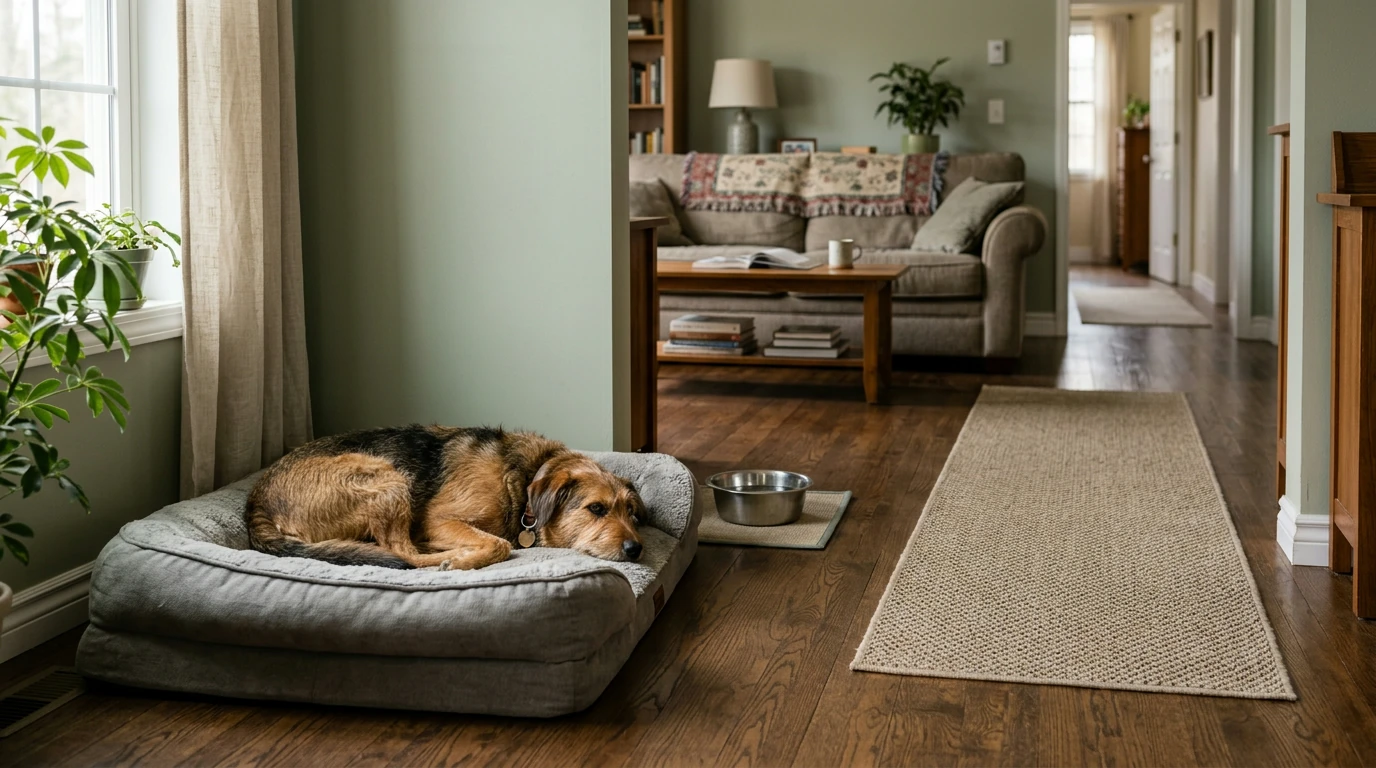
A home where your dog feels at ease does not have to look different from a home that works for you. Often, the most helpful changes are modest: a dependable place to rest, an easy route to water, and room to step away when household activity gets busy. We suggest looking at your rooms from your dog’s point of view, then changing one thing at a time so you can see what helps.
Start by noticing where your dog already settles. Some dogs want to be close enough to hear family activity; others choose a quieter corner. A good resting spot is comfortable, accessible, and out of the path of people walking through the room. Your dog should not have to move every time someone opens a door or crosses the floor.
Consider how easily your dog can reach the spot, especially if age or limited mobility makes certain routes difficult. Keep the area available as a choice rather than using it for punishment, and let your dog leave when they want to. If your dog likes company, you can offer a place near the household’s usual gathering area as well as a quieter option. There is no need to insist on one “correct” location if your dog shows you a clear preference.
Fresh water should be easy to reach throughout the day. Put food bowls somewhere your dog can eat without being crowded by passing feet or interrupted by routine household traffic. If you have more than one pet, pay attention to whether each can approach essentials comfortably.
Your own supplies matter to the setup, too. Keeping a lead, waste bags, and a towel together near the exit can make departures less hectic. Store grooming items where you can find them without leaving clutter in your dog’s walking path. Our room-by-room check offers a starting point:
| Area | What to look for | A simple adjustment |
|---|---|---|
| Resting spot | A comfortable place away from constant foot traffic | Move bedding to a quieter corner |
| Food and water | Easy access without interruptions | Separate bowls from busy walkways |
| Entryway | Space for calm departures and arrivals | Keep walking supplies together |
| Shared rooms | A way to stay nearby or step away | Leave a clear path to a resting area |
A room may be convenient for people yet awkward for a dog to navigate. Watch for slick stretches of flooring, furniture that narrows a familiar route, or noise that repeatedly interrupts rest. Visitors can change how a space feels, too. Notice whether your dog settles more easily in one area than another rather than assuming every busy moment calls for more activity.
Make adjustments gradually. A non-slip runner on a route your dog uses, a wider passage around furniture, or a resting place farther from the door may do more than several purchases made at once. Change one part of the setup, give your dog time to use it, and observe what happens. For broader everyday care considerations, the ASPCA’s general dog care guidance is a useful reference.
Choice is especially valuable in a shared room. Your dog may want to stay near you for a while and then move somewhere calmer. Keep that route open, and make sure no one treats the retreat as an invitation to follow and bother them.
A predictable day need not run by the minute. Aim for a manageable pattern of meals, walks, play, and rest that fits your household. Consistency helps you notice when something is different, while flexibility lets you respond to your dog’s needs and the realities of your day.
Balance suitable activity with opportunities to settle. If your dog seems unable to relax after a busy period, try a quieter transition rather than automatically adding more stimulation. When guests arrive, preserve access to water and an undisturbed place away from the gathering. You can also ask visitors to give your dog space instead of making every arrival a social event. The RSPCA’s guidance on dogs and companionship offers additional perspective on meeting dogs’ social needs.
The best test of a home arrangement is how your dog uses it. Where do they choose to rest? Can they move between rooms without squeezing past obstacles? Do they seek distance at particular times of day? Your answers may change as your dog ages, your schedule shifts, or your household moves.
If you would like a structured way to work through those observations, our A Home Where Your Dog Feels Truly at Ease practical guide focuses on thoughtful decisions about calm, comfort, and everyday harmony. If barking is a specific challenge in your routine, our Stop the Barking Madness! checklist offers a separate, focused resource. Neither replaces individual guidance: if your dog shows persistent distress or a sudden behavior change, contact a veterinarian or qualified behavior professional rather than relying on changes to your home alone.
Choose an accessible, comfortable spot away from constant foot traffic. Let your dog’s preference for closeness or quiet help guide the location.
No. In many homes, a reliably undisturbed spot and a clear way to move away from activity are enough to offer a useful choice.
Watch whether your dog chooses to use the space and can rest there without frequent interruption. If distress persists, seek professional guidance rather than expecting one adjustment to resolve it.





Leave a comment