A chore chart works best when it helps your child see what to do next and gives your family a simple way to notice their effort. It doesn’t need dozens of boxes or an elaborate reward system. Start with a few jobs your child can finish, choose a format that fits your routine, and adjust it as you learn what works. For more guidance, see 7 chores for kids who struggle with focus.
Choose two or three jobs for the first chart. Putting shoes away, placing clothes in a hamper, and clearing a plate all have a visible finish line. A short list gives your child time to learn the routine without facing a page full of unchecked boxes. For further reading, see How to Work on a Chore Chart with Your Child at Home.
Write each job as an action. “Put books on the shelf” tells your child more than “tidy up.” If a task has several steps, make those steps visible or do them together before adding the job to the chart. “Get ready for school,” for example, might become “put lunchbox in backpack” and “place shoes by the door.”
Match tasks to your child’s abilities and supervise where needed. The goal is practice, not a perfect result on the first try. The American Academy of Pediatrics offers additional guidance on chores and children, including the value of giving children opportunities to contribute at home.
The best format is the one you and your child will actually use. A picture checklist can make the next action easier to spot. A weekly grid suits jobs that repeat most days, while movable cards work when family members trade responsibilities. If mornings or evenings tend to feel rushed, a short list for each transition may be more useful than an all-day chart.
| Format | Works well when | Easy way to use it |
|---|---|---|
| Picture checklist | Your child benefits from visual cues | Pair one simple image with one short action |
| Weekly grid | The same jobs repeat most days | Add a check or sticker after each completed task |
| Movable task cards | Jobs rotate among family members | Move each finished card to a “done” area |
| Morning and evening lists | Transitions are the hardest part of the day | Group a few jobs under each routine |
Put the chart near the work or somewhere your family already checks its plans. A list for putting away coats may belong by the entryway; an evening list may make more sense near the bedroom. Keep pencils, stickers, or movable pieces within your child’s reach so they can mark their own progress.
Let your child make a small choice about the chart: its color, a theme, or whether completed jobs get a check, sticker, or moved card. They don’t have to design the whole system to feel involved in it.
When you notice a finished job, name what happened: “You put your art supplies back where they belong.” That tells your child exactly what they accomplished. If your family uses rewards, set a clear, achievable goal, but leave room to appreciate helpful acts that aren’t on the chart. Not every contribution needs to become a transaction.
Build in a reset, too. A missed box can tell you that a task needs a clearer description, a different time of day, or a little more help. It doesn’t mean the chart has failed. You can simply start again tomorrow with the same short list—or make one useful change.
Before you ask your child to use the chart independently, do each task together once. Show where things go and what “finished” looks like in your home. For clearing a plate, that might mean taking it to the counter; in another household, it might mean placing it in the dishwasher with an adult nearby. The chart should reflect your actual routine.
Choose one predictable check-in time instead of reminding your child about every box throughout the day. After dinner, you might spend two minutes looking at what got done and what still needs attention. Once a week, ask whether any job feels too big or lands at an inconvenient time. Small edits help keep the chart useful as schedules and abilities change.
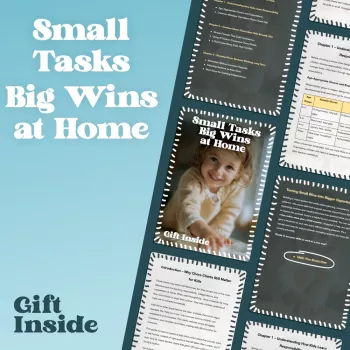
For more ways to shape a chart around your household, explore our Small Tasks Big Wins at Home – Creative Kids Chore Chart Ideas Guide. Use the ideas that suit your child and leave out anything that adds more work than it saves.
If pet care is part of your household routine, keep a child’s chart focused on suitable, supervised jobs, such as putting away pet supplies. For the adults handling a separate dog-training plan, our Stop the Barking Madness! dog training guide and checklist is a separate resource—not a substitute for age-appropriate chores or adult supervision.
Begin with two or three specific, manageable tasks. Add or change jobs once your child is comfortable with the routine.
Check whether each task is clear and achievable, then invite your child to help choose a different format. Restart with a short list and a predictable time to check it together.







Leave a comment