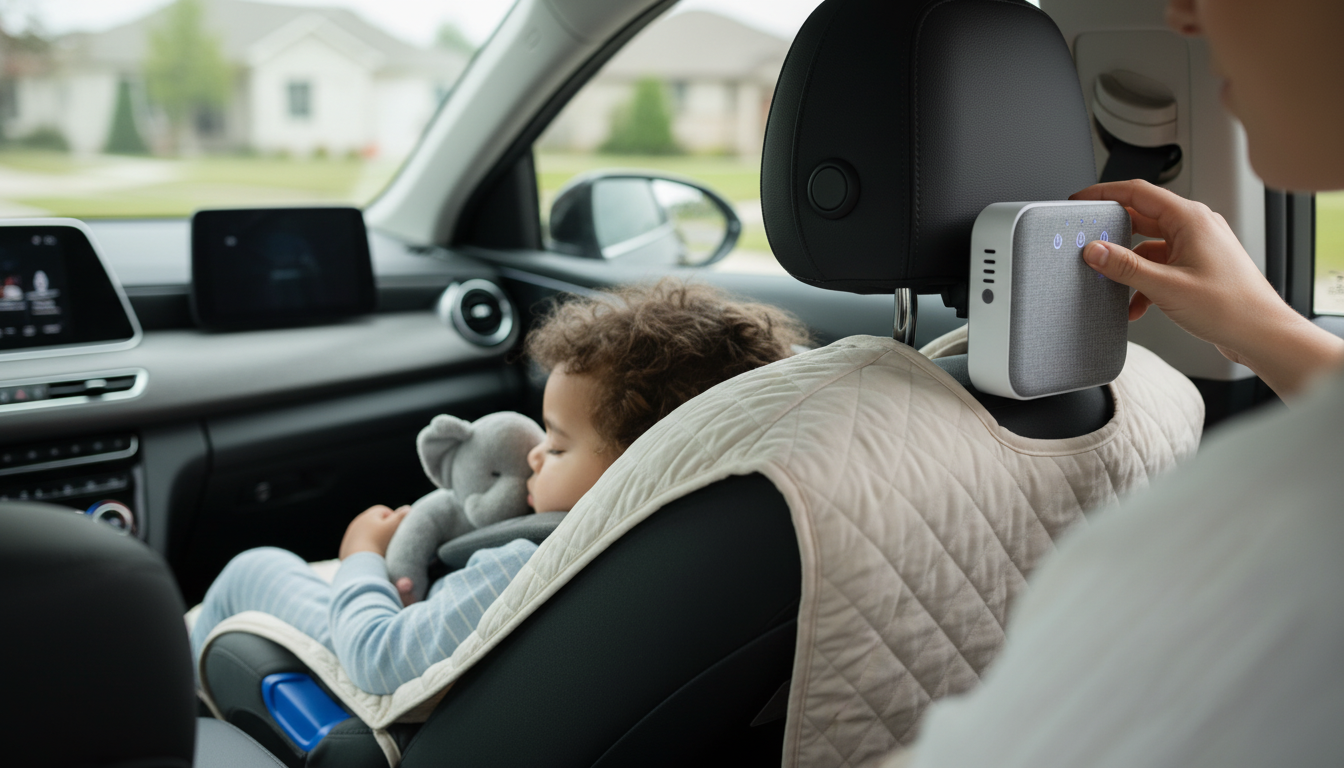
The best “white noise” for helping a toddler sleep through sudden sounds is steady, non-looping broadband noise played at a safe volume. In practice, many families do best with true white noise or a softer “colored” option like pink or brown noise, as long as the sound is consistent and doesn’t fade in and out. The goal is to create a stable sound floor that masks abrupt changes—like a door closing, a dog barking, or a car horn—so those spikes don’t jump out and trigger a partial wake-up.
Choose a sound source that runs continuously (or uses a high-quality, seamless track). Looped audio can have tiny gaps or repeating patterns that some toddlers notice at night, especially during lighter sleep. A dedicated sound machine or an app/track designed for “continuous playback” can help keep the sound uniform from bedtime through morning.
There’s no single winner for every child, but these guidelines help:
Keep the volume at a safe, moderate level and place the machine across the room rather than right next to your toddler’s head. A good rule is: if it feels loud to an adult standing near the crib/bed, dial it back. Consistency is key—use the same setting each night so your toddler’s brain treats it as a normal sleep cue.
For more practical strategies to help your child stay asleep during unexpected noise, visit this guide to helping a toddler sleep through loud noises.
Yes, many toddlers do best when it runs continuously through the night, since sudden silence can make random noises feel more startling. Keep it at a safe, moderate volume and maintain the same setting consistently.





Leave a comment