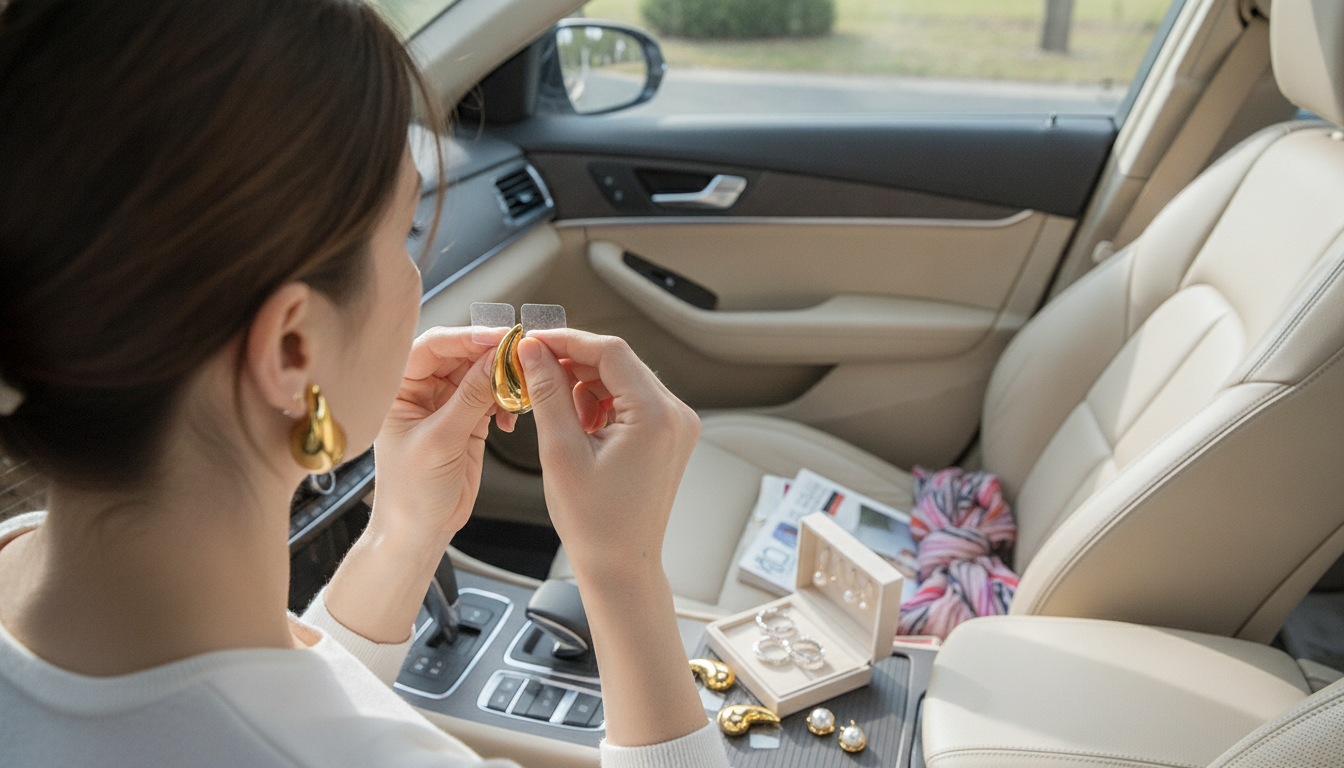
The anti-gravity technique is a styling approach that uses balance, counterweight, and strategic placement to make an accessory appear lighter, “floating,” or less pull-heavy than it really is. Instead of relying on a single pressure point, the design and the way it’s worn help distribute weight so it feels more stable on the body and looks effortlessly suspended.
When something hangs from one point, gravity makes it swing and tug. Anti-gravity styling minimizes that tug by shifting the center of mass closer to the ear (or another stable anchor point) and reducing leverage. The more a piece extends outward or downward, the more it magnifies pull; bringing key weight closer to the anchor makes it feel noticeably lighter.
In earrings, this “anti-gravity” effect often comes from pairing a bold front-facing shape with a more supportive back, using wider contact surfaces, or choosing hardware that grips securely without pinching. Some statement styles look dramatic but are engineered so the visual volume isn’t the same as actual weight—think hollow forms, lightweight materials, or shapes that spread presence without adding mass.
Even well-designed pieces can feel heavy if the fit is off. A secure backing and correct alignment prevent the earlobe from tilting, which is what makes earrings look like they’re “drooping.” With the right fit, the accessory holds its intended orientation, creating that clean, lifted look associated with anti-gravity styling.
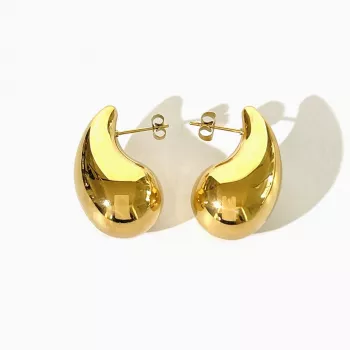
For a real-world reference on how bold earrings can look substantial while still wearing comfortably—and how fit, care, and styling choices affect the “float” factor—see this guide to exaggerated water drop earrings.
Choose secure, supportive backings and make sure the earring sits upright rather than tilting forward. Lightweight materials and hollow or volume-forward designs can also deliver the same visual impact with less pull.


Leave a comment