Stainless Steel Camping Bowl & Plate Set for Durable Outdoor Meals
A reliable camp meal setup should handle heat, bumps, quick rinses, and repeated use without absorbing odors or staining. A stainless steel camping bowl and plate set keeps food service simple on the trail, at the campsite, or in the RV—built for everyday outdoor cooking and easy cleanup when water is limited.
Why stainless steel works so well outdoors
When your gear gets packed, stacked, and rattled down a forest road, dinnerware needs to be tougher than “picnic-only” dishes. Stainless steel is a go-to for camp kitchens because it’s made for real use, not just occasional snacks.
- Durability for real camp use: stainless steel resists cracking, chipping, and warping better than many lightweight alternatives.
- No lingering flavors: it doesn’t hold onto smells the way some plastics can, so last night’s curry doesn’t haunt this morning’s oatmeal.
- Confident hot-food handling: it tolerates hot meals and warm wash water without deforming.
- Low-fuss cleaning: most messes scrub off quickly with a small sponge or cloth.
- A long-life choice: using a reusable set reduces dependence on disposable plates and bowls for weekend trips and longer stays.
Camp dinnerware materials: what to expect
| Material |
Strengths |
Trade-offs |
Best for |
| Stainless steel |
Very durable, odor-resistant, easy to sanitize |
Can feel hotter to touch with very hot food |
Frequent camping, group trips, rugged packing |
| Plastic |
Lightweight, low cost |
Can absorb odors, can scratch, heat limits |
Short trips, cold foods, ultralight budgets |
| Aluminum |
Lightweight, good heat transfer |
May dent, surface wear over time |
Backpacking kits when weight is priority |
| Enamel-coated |
Classic look, easy to eat from |
Can chip if dropped; chips can rust underneath |
Car camping where breakage risk is low |
What a bowl-and-plate set simplifies at camp
Camping meals are smoother when “serve” and “cook” stay separate. A dedicated bowl and plate per person reduces the kitchen shuffle and keeps cleanup predictable.
- One set per person: portioning is easier and you reduce shared surfaces—especially helpful for family trips and group camp kitchens.
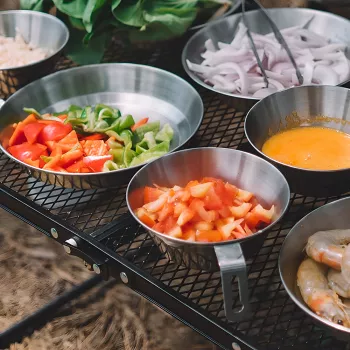
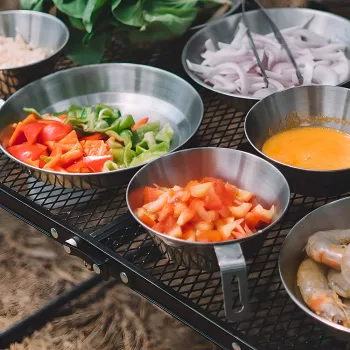
- Cleaner pack-up: a real bowl for oatmeal, chili, noodles, or salads means you’re not eating out of cookware meant for heating.
- Fast serving line: plates handle mains and sides while bowls cover soups, stews, cereal, and snacks.
- Less gear overlap: keeping “cook pots” for cooking and “eating pieces” for eating reduces extra washing and helps prevent flavor transfer.
- More comfortable eating: rigid dinnerware stays stable on picnic tables, camp kitchens, tailgates, and RV dinettes.
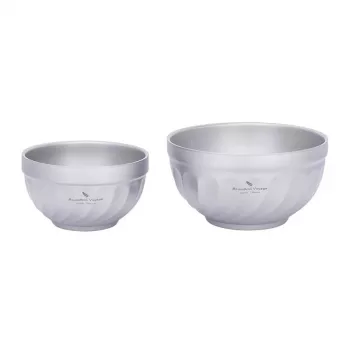
Our in-stock camp-ready picks
A practical guide to care, cleaning, and packing
With stainless steel, the difference between “easy cleanup” and “why is this stuck on forever?” usually comes down to timing and a few simple habits.
- Clean soon after eating: dried-on sauces take more water and scrubbing. Wipe out residue right away with a spatula edge or even a scrap of tortilla.
- Use a minimal soap approach: a few drops go far. Rinse thoroughly so there’s no soapy taste at your next meal.
- Avoid abrasive scraping when possible: a soft scrub pad handles most mess while keeping surfaces smoother over time.
- Dry before storing: a quick towel-dry prevents water spots and helps packed gear stay fresher.
- Pack quietly: nest pieces with a cloth, bandana, or small towel in between to cut clanking and protect other gear.
- Sanitize thoughtfully: when sharing camp kitchens, wash with warm soapy water and allow pieces to fully air-dry.
For backcountry trips or minimal-water sites, it also helps to follow widely accepted low-impact cleanup practices, including packing out food waste and disposing of wastewater properly. The Leave No Trace guidance is a solid reference: Dispose of Waste Properly.
Meal ideas that pair well with stainless steel bowls and plates
Stainless steel shines with meals that go from pot to bowl without fuss, plus “mix-and-match” camp food where you want sturdy pieces that don’t stain.
- Bowls: oatmeal with nuts and dried fruit; ramen upgrades with egg and greens; chili; curry and rice; taco salad; yogurt and granola.
- Plates: grilled skewers and vegetables; burgers and roasted potatoes; wraps and quesadillas; pancakes or French toast; charcuterie-style snacks.
- Low-water cleanup meals: foil-pack dinners, one-pot pasta, rice bowls, and tortillas reduce sauces that cling.
- Make-ahead options: pre-cooked grains and proteins reheat quickly and serve cleanly with a bowl-and-plate setup.
When you’re cooking proteins, safe handling still matters outdoors. If you want a quick reference for doneness, the USDA’s safe minimum internal temperature chart is a reliable standard: USDA FSIS Safe Minimum Internal Temperatures.
When to choose stainless steel over other camp dinnerware
FAQ
Is stainless steel safe for eating and serving hot foods at camp?
Yes—stainless steel is commonly used for food-contact surfaces and handles hot foods well. For hygienic reuse, wash with warm soapy water when possible and let pieces fully dry before packing them away.
How do stainless steel bowls and plates clean up when water is limited?
Scrape and wipe first to remove oils and food bits, then use a small amount of soap with a sponge or cloth and rinse efficiently. Choosing lower-mess meals (like foil-pack or one-pot dinners) can also reduce how much washing you need.
How can camp dinnerware be packed to prevent noise and scratches?
Nest bowls and plates with a cloth or bandana between them to reduce clanking and scuffs. Keeping utensils in a separate pouch helps prevent rubbing and keeps your packed kit quieter.
Recommended for you



Leave a comment