A dealership demo car can feel nearly new and cost less than an untouched vehicle. That does not automatically make it a bargain. The useful question is whether the savings hold up after you account for the car’s mileage, prior use, condition, warranty, financing, and full out-the-door price. We recommend treating “demo” as a description to investigate, not a guarantee of value.
Dealerships may use demo cars for customer test drives, staff transportation, or display. Those uses can put very different amounts of mileage and wear on a vehicle, so ask how the specific car was used and who drove it. Get its current odometer reading rather than relying on an older advertisement.
Also ask whether the car has been titled or registered, and request its sale status in writing. That status can affect whether it is sold as new or used under applicable rules. Separately, find out when the manufacturer’s warranty began: your purchase date may not be the date coverage started.
A discount from the sticker price is only a starting point. Ask for an itemized out-the-door quote that includes taxes, fees, and add-ons, then compare it with quotes for an equivalent new car and a comparable used car. Keep the comparisons as close as possible in trim, equipment, and location. A demo’s lower advertised price may lose its advantage if it comes with costly extras or less favorable financing.
Next, put a value on what you are giving up. Mileage reduces the distance left under a mileage-limited warranty, while prior use can mean tire, brake, or interior wear. A modest discount may be reasonable on a lightly used, well-documented car with substantial coverage remaining; the same discount may be unconvincing on a higher-mileage car that needs work. There is no universal percentage that makes every demo a good deal.
| Check | Ask the dealership | Why it matters |
|---|---|---|
| Price | What is the full out-the-door price? | Fees and add-ons can erase an apparent discount. |
| Mileage and use | What is the current odometer reading, and how was the car used? | More use can mean more wear and less remaining warranty mileage. |
| Warranty | When did coverage begin, and what remains? | Warranty time and mileage may not start on your purchase date. |
| Condition | May I arrange an independent inspection? | An inspection can identify wear or repairs before purchase. |
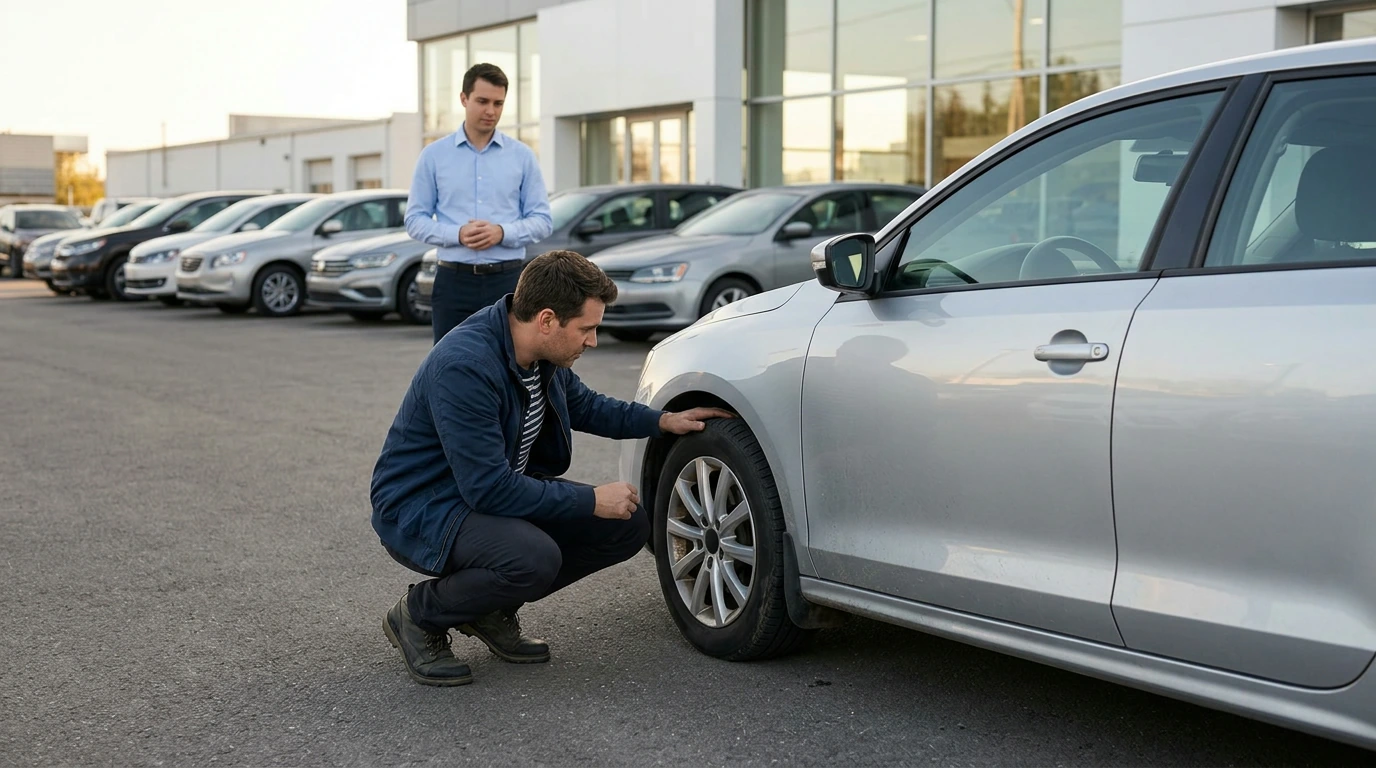
Look closely at the tires, brakes, paint, upholstery, and controls. Confirm that the keys, manuals, charging equipment if applicable, and other promised accessories are present. Take a thorough test drive that gives you time to assess braking, steering, visibility, and whether the car behaves as you expect. Do not let a nearly new appearance substitute for a hands-on check.
Request the vehicle history and available service records, and get written answers about any damage, repairs, or missing equipment. Enter the VIN in the NHTSA recall lookup to check for open recalls. Consider arranging an inspection by an independent mechanic before you commit, particularly if the mileage is substantial or the car’s use is unclear. An inspection may reveal issues that a short test drive will not.
If the vehicle is being sold as used, review the paperwork and any warranty terms carefully. The FTC’s guide to buying a used car from a dealer explains useful steps for evaluating a dealer sale. Whatever the car’s stated status, ask the dealership to identify in writing the manufacturer coverage still in effect and any separate dealer promises.
A demo car may be worth buying when its history is clear, its condition checks out, and its verified out-the-door savings justify both the mileage and the warranty coverage you will have left. Compare financing offers on the total amount you would pay, not just the monthly payment. If an inspection uncovers needed work, factor a written repair estimate into your comparison or negotiate before signing.
Be willing to walk away if the dealership will not explain prior use, give you an out-the-door price, document coverage, or allow a reasonable inspection. You can make a decision on a different car more confidently than you can fill gaps in this one’s history with assumptions.
For a take-along comparison framework, our Smart Buyer’s Guide to a Demo Car helps you keep the key questions together before a dealership visit. If you also want personal gear for longer test drives or your eventual commute, we carry in-ear headphones; leave them off while driving so you can hear and evaluate the car.
It depends on the specific vehicle’s title or registration status and applicable rules. Ask the dealership to confirm its sale status in writing.
Do not assume it does. Ask when the warranty began and for the exact time and mileage remaining.
There is no universal discount. Compare out-the-door quotes for similar new and used cars, then weigh the demo’s mileage, condition, and remaining coverage.






Leave a comment