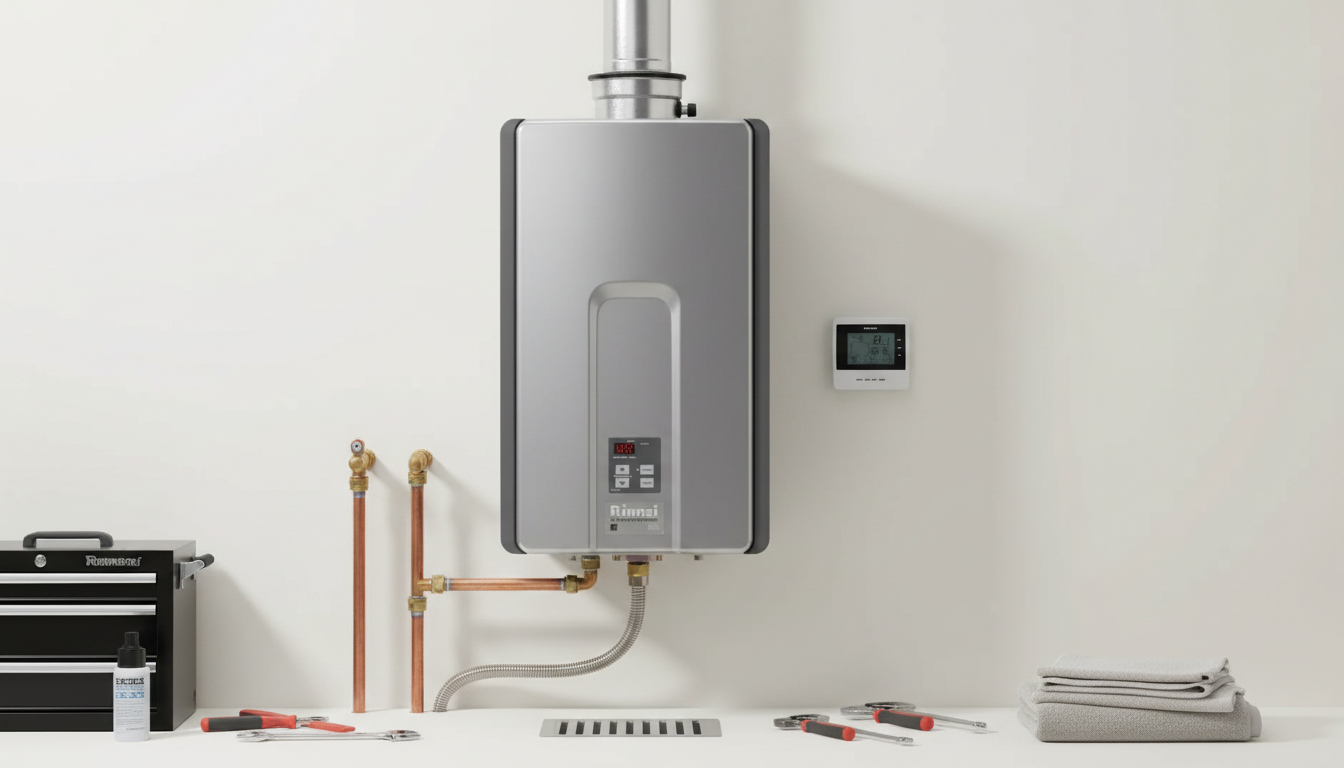
A 7.5 GPM natural gas tankless water heater can deliver strong hot-water performance for multi-fixture use—when the gas supply, venting, and incoming water temperature are matched to the unit’s requirements. This guide covers sizing, indoor installation essentials, operating costs, and a clear checklist to help avoid common setup mistakes.
A 7.5 GPM class unit is often a practical middle ground: strong enough for many everyday “two-things-at-once” scenarios, without jumping to the higher fuel demands of larger models.
“7.5 GPM” is not a universal promise for every home and every season. Tankless ratings are typically tied to a specific temperature rise. When incoming water is colder, the heater must work harder to raise it to your setpoint, and the maximum usable flow goes down.
| Fixture/use | Typical flow (GPM) | Notes for simultaneous use |
|---|---|---|
| Shower (standard) | 2.0–2.5 | Two showers can approach 4.0–5.0 GPM |
| Shower (low-flow) | 1.5–2.0 | Easier to run with another fixture |
| Bathroom sink | 0.5–1.0 | Often intermittent; low impact if brief |
| Kitchen faucet | 1.0–2.2 | Higher flow when filling pots |
| Dishwasher | 1.0–1.5 | Cycles on/off; pairs well with a low-flow shower |
| Clothes washer | 1.5–2.5 | Hot/cold mix varies by cycle |
Indoor installation is convenient and helps protect equipment from freezing temperatures, but it raises the bar for doing the job correctly. Venting and combustion air are not “close enough” items—each model has specific requirements.
For code and safety context, installers commonly reference standards aligned with the NFPA 54 National Fuel Gas Code and local amendments.
For an efficiency overview and usage considerations, see the U.S. Department of Energy guide to tankless (demand-type) water heaters. Pairing a tankless heater with water-saving fixtures can also reduce the amount of hot water you need to produce; the EPA WaterSense program is a helpful reference point for efficient fixture options.
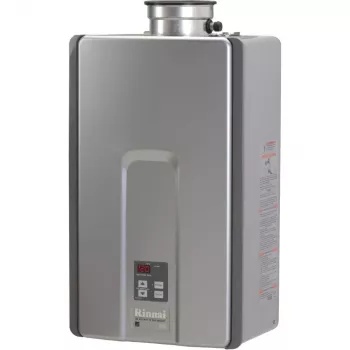
If you’re planning an indoor natural gas setup and want a space-saving option designed for continuous hot water, the Tankless Water Heater, 7.5 GPM, Natural Gas, Indoor Installation is built for indoor placement where consistent performance and service access matter.
| Item to verify | Why it matters | What to do |
|---|---|---|
| Gas line size and run length | Prevents pressure drop and performance issues | Have installer size piping for full load |
| Venting route and allowed vent type | Safety and reliable operation | Match vent material/diameter to requirements |
| Incoming water temperature range | Determines usable flow at desired outlet temp | Estimate winter inlet temp and adjust expectations |
| Water hardness | Scale risk affects performance and lifespan | Plan flushing schedule or add treatment |
| Service access and clearances | Makes maintenance feasible | Confirm space for valves, flushing, and repairs |
Usually yes with low-to-moderate flow showerheads, but actual performance depends on incoming water temperature and the temperature rise needed. In colder climates, two high-flow showers may require reduced flow or staggered use to maintain stable temperature.
Yes, when venting, combustion air supply, clearances, and local code requirements are followed. Correct vent materials, sealed connections, and appropriate CO alarms are key.
Yes. Periodic descaling/flush intervals depend on water hardness and usage. Installing isolation valves and cleaning any inlet filter helps keep temperature stable and protects efficiency.




Leave a comment