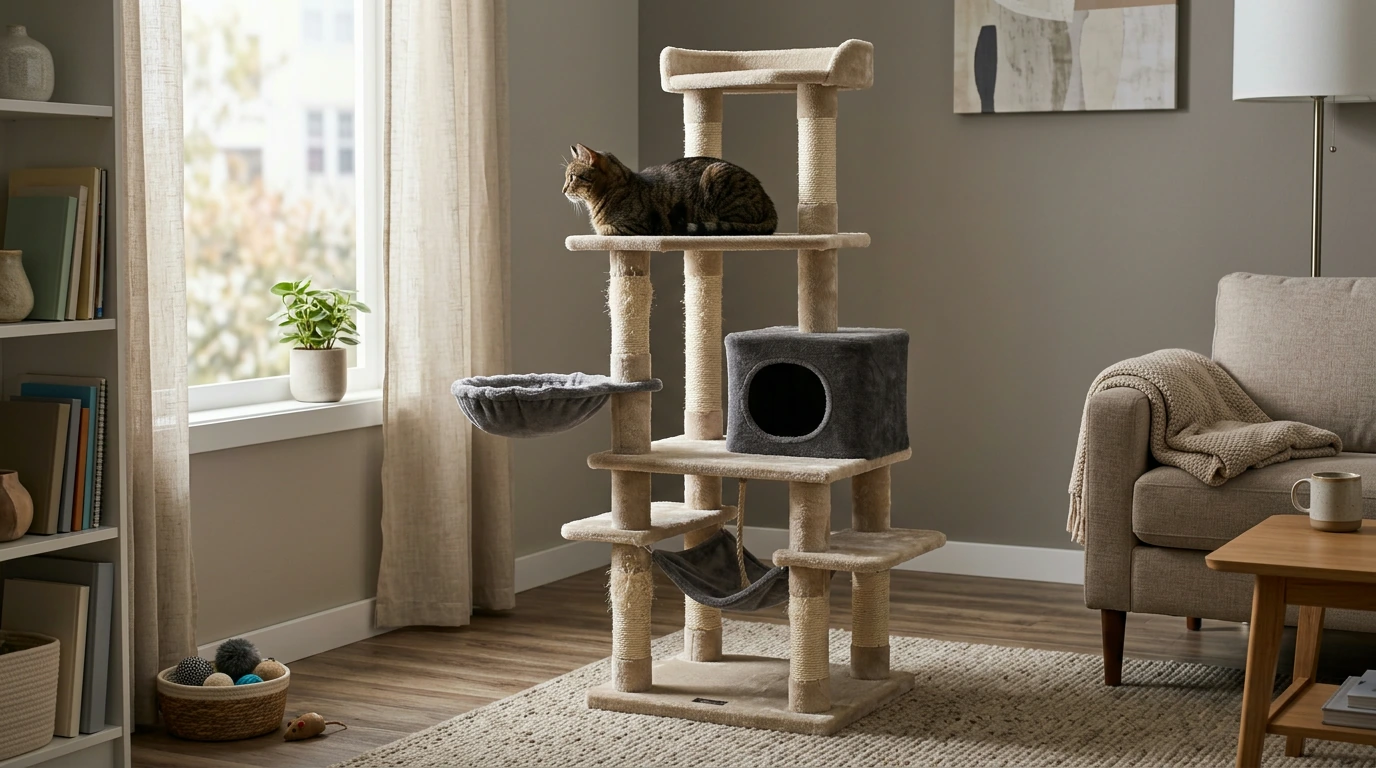
Indoor cats can make good use of a room when it offers more than floor space. A place to climb, a surface to scratch, and a choice of resting spots can give your cat different ways to spend the day. Our 56.3-Inch Multi-Level Cat Tree with Scratching Posts, Hammock, and Cave for Indoor Cats brings those options together in one piece of furniture. Here’s how to decide whether it suits your cat and where to put it.
A multi-level tree adds places to move and pause without requiring a separate perch, scratcher, and hideaway for each activity. Your cat might climb to an elevated spot to look around, stretch against a post on the way down, then settle somewhere else later. Those choices can be useful in a room where floor space is limited.
Each resting area has a different feel. An elevated perch offers a view, the hammock is open to the room, and the cave provides a more sheltered place to settle. A cat may favor one spot for weeks and then choose another as the room’s activity or sunlight changes. You don’t need to decide in advance which spot will be the favorite.
The tree’s 56.3-inch height is an important part of the decision, but height alone does not make a tree right for every cat. Consider how comfortably your cat climbs and moves between levels, as well as the space available in your home. A cat that prefers lower resting places may use the bottom portions more often, and that is still a way to enjoy the tree.
Scratching is a normal cat behavior. The tree’s posts give your cat dedicated places to stretch and scratch, though no scratcher can guarantee that furniture will be left alone. If you’re working on a furniture-scratching habit, the ASPCA’s guidance on destructive scratching offers additional context on providing suitable alternatives.
For downtime, the hammock offers an open place to rest, while the cave gives your cat a more enclosed option. Watch where your cat already chooses to spend time: an exposed chair seat, a tucked-away corner, or a high surface may offer clues. Use those preferences as a starting point, then let your cat make the choice.
| Feature | A way your cat may use it | What to consider |
|---|---|---|
| Multiple levels | Climbing and choosing a perch | Whether your cat is comfortable moving between levels |
| Scratching posts | Stretching and scratching | Where your cat already likes to scratch |
| Hammock | Resting in an open spot | Whether your cat enjoys exposed lounging areas |
| Cave | Resting in a more enclosed space | Whether your cat seeks out sheltered spots |
Start with a level surface where the assembled tree won’t block a doorway or walkway. Before settling on its final position, review the product’s full dimensions and assembly instructions. Leave enough room around it for your cat to approach the posts, climb between levels, and get down without having to squeeze past nearby furniture.
A spot near a window may appeal to a cat that enjoys watching outdoor activity, provided the location is safe and practical for your room. If your cat tends to withdraw when the household is busy, a quieter corner might be more inviting. Accessibility matters either way: a tree your cat can reach easily is more likely to become part of the daily routine than one tucked behind stored items.
Think about your own use of the room, too. You should be able to open doors, walk through comfortably, and check the tree without moving it each time. Choosing a workable location from the start makes it easier to keep the tree available to your cat.
Once the tree is assembled and positioned, give your cat time to investigate it. Some cats approach new furniture immediately; others prefer to observe it first. Rather than placing your cat in the hammock or cave, let them explore and leave on their own. That freedom can make the new space less of an interruption to their routine.
You can encourage voluntary exploration with a brief play session near the tree or a treat when your cat approaches it. A familiar, cat-safe item placed nearby may also make the area more inviting. Keep the introduction simple, and notice which part catches your cat’s attention instead of trying to guide them through every level at once.
Short play sessions around the tree can give your cat a reason to move between levels. Invite a climb or a reach, but let your cat set the pace. Put away toys or attachments that should not be left out unsupervised when playtime ends. If you’re listening to something while your cat settles nearby, our High-Fidelity 9.2mm Beryllium-Coated Single Driver In-Ear Headphones are another option to explore for your own downtime.
Scratching is normal cat behavior, and posts offer an alternative place to do it, but they cannot guarantee your cat will stop scratching furniture. Placement, encouragement, and patience can help.
Neither is better for every cat. The hammock is open, while the cave is more enclosed; let your cat choose where to rest.
Choose a level, accessible spot with room for your cat to climb and scratch without blocking walkways. Consider your cat’s favorite areas and the tree’s full dimensions.





Leave a comment