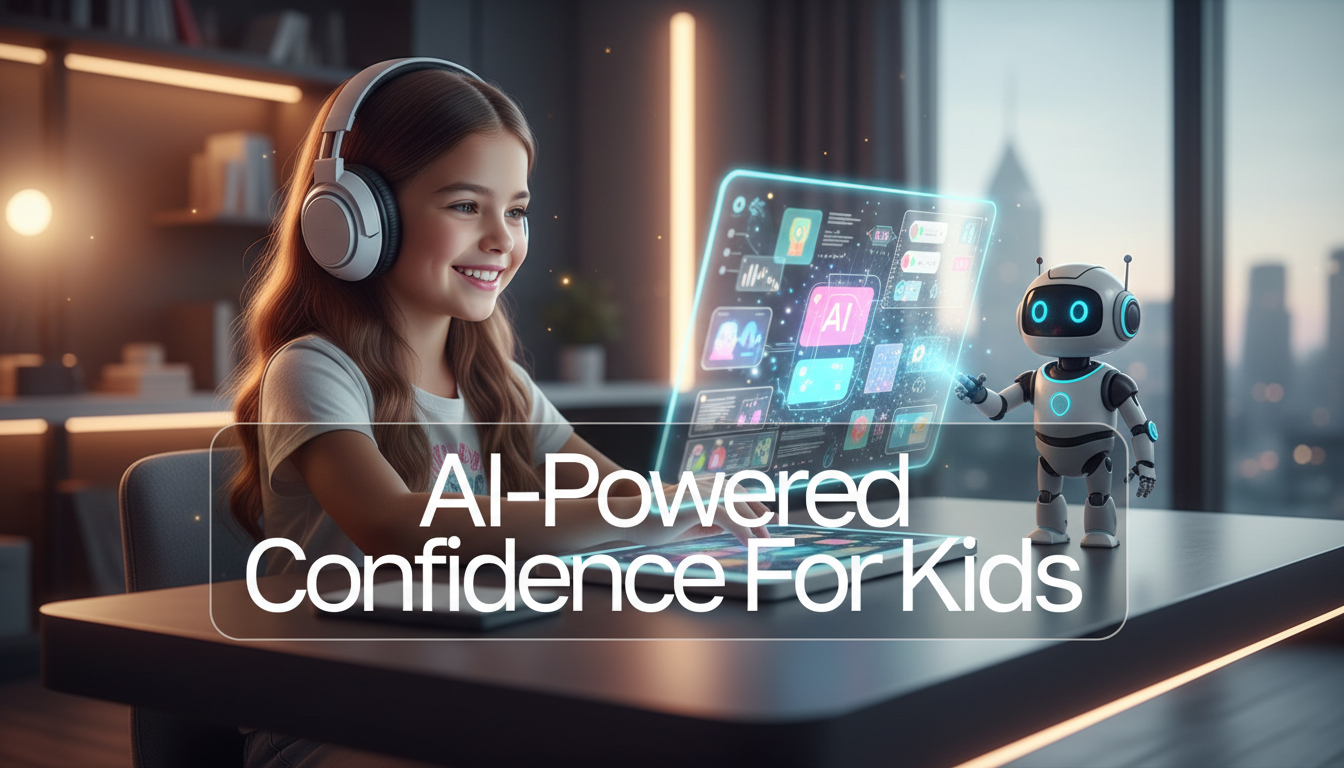
Kids build confidence fastest when they feel capable, heard, and free to try again. Simple, supervised AI activities can turn everyday moments—story time, art, role-play, and goal setting—into small wins that stack up over time. Below are kid-approved, low-pressure ideas that support a growth mindset, self-expression, and steady skill-building at home, in classrooms, or in homeschool routines.
Healthy confidence often looks ordinary: a child volunteers to try, asks for help without shame, shares an idea even if it’s unfinished, and recovers after a mistake. It’s less about being fearless and more about believing, “I can figure this out.”
Common blockers are easy to miss. Fear of being wrong can turn into silence. Perfectionism can turn a simple assignment into tears. Comparison (especially online) can shrink a child’s sense of “I’m good at something.” Negative self-talk (“I’m bad at math,” “Nobody likes me”) can become a habit if it’s repeated often enough. Some kids simply lack chances to show strengths—especially if they don’t shine in the most visible school tasks.
Small wins help because they’re short, clear, and repeatable: a quick challenge, fast feedback, and a next step that feels doable. Adults make the biggest difference by setting boundaries, celebrating effort (not only results), modeling calm responses to mistakes, and keeping activities age-appropriate and emotionally safe.
Used thoughtfully, AI can act like a non-judgmental practice partner. Many kids are willing to rehearse privately before speaking up in class, trying out for a team, or turning in work. That low-pressure rehearsal can reduce anxiety and increase follow-through.
AI can also personalize scaffolding. A reluctant reader can get shorter sentences and simpler choices; a highly verbal child can explore deeper “why” questions. Reflection loops—gentle follow-ups like “What part felt hardest?” or “What could you try next time?”—build self-awareness and healthier self-talk. And when a kid’s idea becomes a story, song, comic outline, or “mission,” it creates ownership and pride.
Adult guardrails matter. Keep tools public-facing and school/family approved, avoid sharing personal information, and review outputs together—especially with younger kids. It also helps to teach the simple truth: AI can be wrong, and it’s okay to question it.
| Confidence skill | What the kid does | How AI can help | Adult support |
|---|---|---|---|
| Growth mindset | Tries again with a new strategy | Suggests 2–3 next attempts and encouraging phrasing | Praise effort and strategy, not “being smart” |
| Self-expression | Shares interests and opinions | Offers ideas for stories, art themes, or mini debates | Validate feelings; help choose what to share publicly |
| Communication | Explains ideas clearly | Role-plays conversations and gives example sentences | Model respectful tone and turn-taking |
| Problem-solving | Breaks tasks into steps | Creates checklists and mini-goals | Keep goals small and visible |
| Resilience | Handles mistakes calmly | Reframes setbacks as learning moments | Normalize errors; show recovery routines |
Before a hard task (spelling test, soccer practice, dentist visit), ask AI for a short pep-talk your child can read out loud. Personalize it with the goal and a realistic reminder: “I don’t have to be perfect; I just have to start.” Keep it to 3–5 sentences and let the child edit it so it sounds like their voice.
For research-backed framing, it helps to align activities with social-emotional learning skills like self-awareness and relationship skills (see CASEL’s SEL framework: https://casel.org/fundamentals-of-sel/what-is-the-casel-framework/) and resilience habits (APA’s resilience resources: https://www.apa.org/topics/resilience).
Adults should stay in the loop: co-use for younger kids; for older kids, set periodic check-ins and review the kinds of questions they’re asking. Watch for discouraging tone or bias and re-ask for supportive wording. For additional guidance on kids’ online safety, UNICEF’s recommendations are a helpful baseline: https://www.unicef.org/end-violence/how-to-keep-your-child-safe-online.
AI can give kids low-pressure practice, step-by-step guidance, role-play scripts, and reflection questions that support healthier self-talk. Confidence grows fastest when an adult keeps it supervised, celebrates effort, and helps the child apply what they practiced in real situations.
Pick one small goal, then use AI to generate 2–3 practice steps and a short encouraging script the child can read. Rehearse with a quick role-play, do one real-world attempt, then reflect on what worked and choose a tiny next step.



Leave a comment