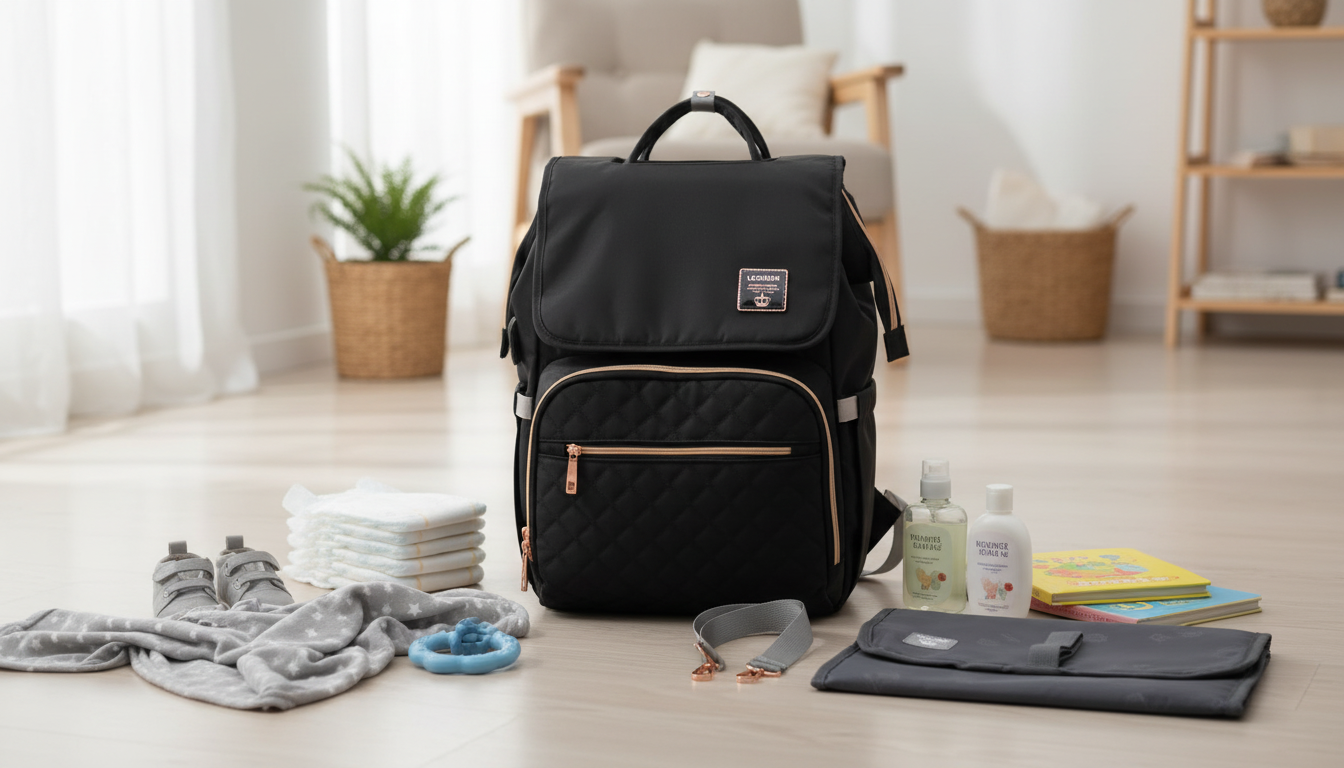
A reliable diaper backpack keeps essentials organized, easy to grab, and comfortable to carry through errands, daycare drop-offs, and travel days. The best options don’t just hold more—they keep everything in a predictable place so you can move quickly when you’ve got a squirmy baby on your hip and a stroller in the other hand. Below is a practical breakdown of what matters most—capacity, pocket design, comfort, and cleanup—plus an easy packing plan you can reuse all week.
“Big” doesn’t automatically mean “better.” A diaper backpack earns its keep when it stays usable in tight spaces (car seats, waiting rooms, restroom changing stations) and when you can find what you need without digging.
Large capacity is most useful when every pocket has a job. The goal isn’t to carry your entire nursery—it’s to carry exactly what you’ll use, plus a small buffer for surprises.
Instead of packing “by item,” pack by what you do. Keep small pouches (or zip bags) for each routine so restocking is fast:
Front and side pockets are ideal for items you want without unzipping the whole bag: wipes, diaper cream, disposable bags, and a spare onesie. When a quick change happens in a cramped stall, you’ll be glad those items are in the same spot every time.
If your backpack has insulated bottle sections or separate bottle pockets, use them. It keeps temperature-sensitive items away from spare clothes and helps you avoid leaks mixing with fabric items. Even when you’re not carrying milk, consistent pocket “rules” reduce mental load.
A dedicated waterproof wet bag (or sealed zip bag) is a simple upgrade that saves the day. Put soiled clothing inside immediately, and keep it in a designated pocket so the rest of the bag stays fresh.
| What to pack | 1–2 hours (quick errands) | Half day (appointments) | Full day (travel/day trip) |
|---|---|---|---|
| Diapers | 2–3 | 4–6 | 7–10 |
| Wipes | Travel pack | Full pack | Full pack + mini backup |
| Changing pad | Yes | Yes | Yes |
| Outfits | 1 spare | 1–2 spares | 2–3 spares |
| Feeding | One bottle/snack | 2 bottles/snacks | Formula/extra snacks + water |
| Comfort | Pacifier/teether | Pacifier/teether | Pacifier + small toy/blanket |
| Hygiene | Sanitizer + bags | Sanitizer + bags | Sanitizer + bags + wipes for surfaces |
| Parent essentials | Wallet/keys/phone | Add charger | Add charger + meds + documents |
A backpack can be perfectly organized and still end up abandoned if it hurts to wear. Comfort features matter most on longer days and in the “hands-full” moments—carrying a baby, pushing a stroller, or juggling daycare bags.
For hygiene on the go, hand sanitizer is helpful, and a quick handwashing plan is even better whenever a sink is available. The CDC’s guide to effective handwashing is a solid reference for families: CDC — Handwashing: Clean Hands Save Lives.
For general diapering best practices (including keeping supplies clean and organized), HealthyChildren.org from the American Academy of Pediatrics is a helpful resource: American Academy of Pediatrics — HealthyChildren.org.
If you want a ready-to-go option designed around space, access, and everyday practicality, consider the Large Capacity Multifunction Diaper Backpack for Moms. Pairing a well-organized bag with simple routines (like a quick restock after each outing) can make day-to-day logistics feel noticeably lighter.
And for parents navigating early habits as kids grow, the printable resource Thumb-Sucking Explained: Easy Tips & Tricks – Printable Checklist for Parents can be an easy reference to keep at home or tuck into your planning folder.
Use outing length as the baseline: pack at least one diaper per 2 hours plus 1–2 extra for delays. Increase the count for younger babies or if blowouts are common.
Keep wipes, diaper cream, hand sanitizer, disposable bags, pacifiers/teethers, and a spare onesie within easy reach. These are the items most often needed quickly and one-handed.
Place soiled clothes in a waterproof wet bag or sealed zip bag, then store it in a dedicated pocket away from clean items. Remove and wash the wet bag promptly after you get home to prevent lingering odors.




Leave a comment