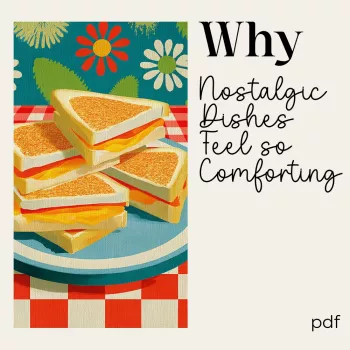
Nostalgic meals can feel instantly grounding: familiar aromas, simple flavors, and remembered routines create a sense of safety that’s hard to replicate. The comfort often comes less from “perfect” cooking and more from recognition—foods tied to people, places, and moments that shaped everyday life. When the day has been loud, busy, or emotionally heavy, going back to something known can be a surprisingly effective way to feel steady again.
Nostalgia isn’t just about old recipes—it’s about cues your brain learned to treat as “home.” A dish can be nostalgic even if it’s basic, store-bought, or improvised, as long as it carries the same signal your memory recognizes.
There’s a reason “plain” comfort food can hit harder than a complicated new recipe. Many nostalgic staples deliver quick sensory rewards—warmth, salt, creaminess, carbs—plus the emotional payoff of “I know exactly what this is supposed to taste like.”
Smell is a powerful shortcut to memory. The pathways involved in processing scent are closely connected with parts of the brain that handle emotion and recall, which is why one whiff of toasted bread or vanilla can bring back a whole scene. For a deeper look, see Harvard Health Publishing’s overview of the link between memory and smell and Britannica’s summary of the olfactory system.
Ritual matters, too. Stirring, simmering, or baking adds structure and a gentle pace—almost like a reset button. And serving style can be the final “click”: the same cocoa tastes more nostalgic in a favorite mug.
| Trigger | Why it hits | Quick way to bring it back |
|---|---|---|
| Smell (butter, cinnamon, toasted bread) | Direct link to memory and comfort | Toast or warm spices briefly in a pan before cooking |
| Texture (creamy, crunchy, chewy) | Signals familiarity and satisfaction | Add a simple topper: crumbs, crackers, or a swirl of cream |
| Sound (sizzle, kettle, microwave beep) | Recreates routine and timing | Use the same method that matches the memory (stovetop, oven, or microwave) |
| Serving ritual (mug, lunchbox, big pot) | Associates food with people and place | Serve in a familiar dish or pack it the way it used to be eaten |
If the goal is comfort, not culinary achievement, a simple checklist helps you build a meal that feels like a “yes” before you even take the first bite.
If you want a ready-to-use version of that flow, the printable download Why Nostalgic Dishes Feel so Comforting | Nostalgic Meal Checklist | Cozy Kitchen Guide (Instant Digital Download) is an easy way to keep the prompts on hand for low-energy days.
Sometimes nostalgia doesn’t land the way you expect. Stress can change appetite, and certain memories can bring bittersweet feelings. The goal is still care—just in a form that fits the moment. For background on how stress impacts the body, the American Psychological Association offers a helpful overview of stress effects on the body.
When “good enough” needs to be the standard across the day (not just dinner), a supportive read like Parenting Without Perfection: A Practical Guide on How to Let Go of Perfect Parenting and Embrace Imperfections with AI Support can pair well with the same mindset you bring to comfort cooking: steady, practical, and kind.
For a ready-made set of prompts and planning pages, Why Nostalgic Dishes Feel so Comforting | Nostalgic Meal Checklist | why simple nostalgic dishes feel so satisfying | Cozy Kitchen Guide | Instant Digital Download can be printed or saved for quick access.
Many people feel nostalgic about simple breakfasts (pancakes, oatmeal, toast), school-lunch snacks (peanut butter sandwiches, pudding cups, crackers), holiday dishes (stuffing, sweet potato casserole), or quick soups and pastas. To find yours, think of one “signature cue” you remember most clearly—like the smell of cinnamon, the creaminess of boxed mac and cheese, or the crunch of buttered toast—and build the meal around that cue.
Familiar foods reduce uncertainty, which can feel calming when stress is high. Childhood meals also carry strong emotional memory signals—especially aroma—and the routine of making or eating them can add structure when everything else feels like a lot.






Leave a comment