Vans fans move fast: micro-trends, subcultures, and platform-specific aesthetics can shift in weeks. The most reliable way to keep up isn’t guessing—it’s building a repeatable system to listen, segment, and create with evidence. Below is a practical approach to AI-assisted audience research that helps identify who’s engaging with Vans-inspired style, what they care about, which signals matter most, and how to translate insights into creative direction without losing authenticity.
Strong audience research starts by defining people by motivations and behavior, not just age ranges and zip codes. With a Vans-style customer, that usually means mapping “style tribes” (skate, streetwear, surf, punk/alt, DIY customizers), use-cases (daily beaters, campus, workwear casual), and values (durability, self-expression, nostalgia). AI helps by turning messy text into readable patterns—without pretending it’s the final truth.
A useful rule: separate “Vans the product” from “Vans as culture.” Demand isn’t only shaped by shoes; it’s shaped by skate clips, local shop energy, music scenes, art, and community events. AI can summarize broad inputs—comments, captions, review text, forum threads, creator transcripts, and even customer support logs—then surface clusters, topic sentiment, and “why” statements tied to verbatim quotes.
Keep guardrails tight. Avoid sensitive targeting, avoid stereotyping, and treat AI outputs as hypotheses to validate. The goal is clarity you can act on, not a black-box verdict.
The most useful signals usually show up before “I’m buying this” language appears. Focus on early indicators and cross-check them across sources.
For context on how people use platforms (and why certain formats spike faster than others), research from Pew Research Center can help frame where attention is shifting.
Segmentation only works if a creative team can act on it. Start with 3–6 segments—not 20 micro-groups—and name them by motivation. For each segment, capture: top needs, common objections, preferred silhouettes, favorite color families, and typical price tolerance. Then use AI to extract verbatim language—how people describe comfort, durability, and style in their own words—so product pages and ads sound native instead of “brand-smooth.”
| Segment | What they care about | Content that hooks them | Common friction |
|---|---|---|---|
| Function-first skaters | Board feel, durability, grip, reinforced toe | Trick clips, wear tests, skate shop credibility | Skepticism about lifestyle-only launches |
| Nostalgia collectors | OG colorways, heritage, limited drops | Archive storytelling, collab history, retro fits | Fear of missing out; authenticity concerns |
| Minimalist commuters | Comfort, easy styling, neutral palettes | Outfit formulas, “one-shoe” capsules, care tips | Fit issues; “too flat” comfort perception |
| Customizers/DIY | Blank canvas, materials, swap options | Tutorials, before/after, community showcases | Durability of paint/adhesives; cleaning anxiety |
After clustering, validate quickly: a short survey, a small paid creative test, or a skim of your own customer list. The fastest wins come from confirming (or rejecting) the biggest assumptions early.
A dependable trend lens uses three tiers: micro (weekly aesthetics), meso (seasonal styling), and macro (multi-year culture shifts like relaxed fits and nostalgia cycles). Instead of reacting to one-off virality, track repeat motifs—colors that keep returning, outfit pairings that show up across creators, and angles that repeatedly trigger “what shoes are those?” comments.
Leading indicators often look like this: creators post “how I style it” content before brands run ads; comment sections ask for shoe IDs before retailers see search spikes; or local community energy (events, shop drops) precedes broader online demand. Always compare trends by segment—what’s hot for minimalists may be ignored by skaters—and set a threshold so you only act when a signal shows up across multiple sources (social + search + community).
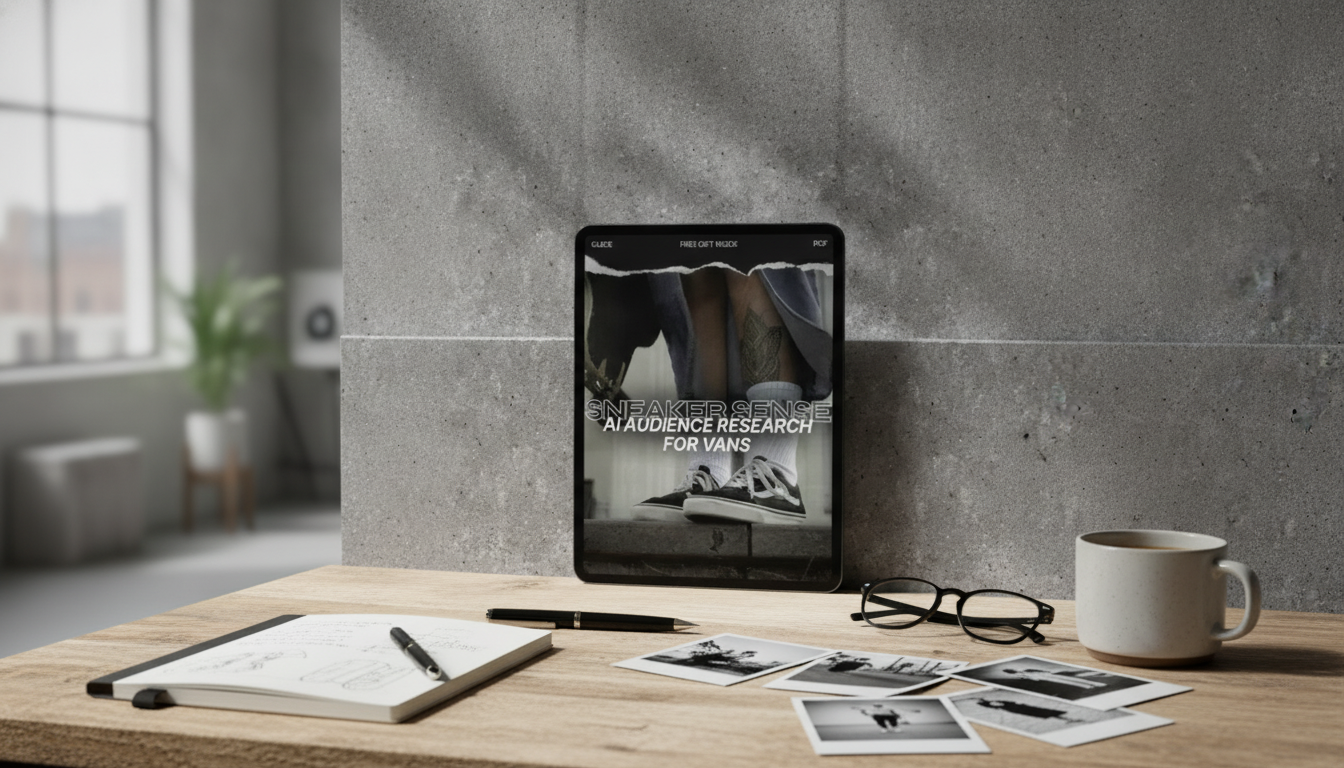
If the goal is faster cycles with fewer blank-page moments, a structured guide can keep segment creation, trend scanning, and concept development consistent. Sneaker Sense: AI Audience Research for Vans – The Ultimate Guide to ai vans audience research, Trend Spotting & Creative Marketing Prompts is designed to make the monthly workflow easier to repeat—so insights stay organized, assumptions are documented, and tests build on each other instead of restarting from scratch.
For teams that need to pitch research-driven creative direction internally (or present results to partners), Speak Confidently in Any Situation – Practical Guide on how to improve public speaking confidence | Digital Download can help turn findings into clearer presentations and tighter decision-making.
Many sneaker brands and retailers use AI across demand forecasting, personalization, merchandising, and marketing, rather than a single company “switching” entirely to AI. The most common shift is adding AI tools to existing workflows—like predicting size demand, summarizing customer feedback at scale, and testing creative variations faster.




Leave a comment